
1. Neglecting to Deburr and Clean the Pipe End
One of the most common errors is skipping the crucial step of deburring the PPR pipe after cutting . A clean, square cut is essential for a proper fusion weld. Failure to remove burrs or a crooked cut prevents the pipe from seating fully into the stainless steel PPR fitting. This creates a weak joint that is likely to leak under pressure. Always use a dedicated pipe cutter and a deburring tool to ensure a smooth, clean surface.
2. Overheating or Underheating the PPR Socket
The fusion welding process for the PPR side of stainless steel PPR fittings requires precise temperature control (typically 260°C) and exact heating times . Heating the pipe and socket for too short a time prevents the materials from fusing correctly, resulting in a "cold weld" that lacks strength. Overheating burns the material, making it brittle and blackened. Always use a calibrated fusion tool and follow the manufacturer's time chart for each pipe diameter.
3. Rotating the Pipe During Fusion Assembly
During the welding process, you must insert the pipe into the heated socket in a straight, axial motion. A frequent mistake is twisting or rotating the pipe while joining it to the stainless steel PPR fitting . This rotation disturbs the melted polymer interface, creating a weak, leak-prone weld. The correct technique is to push the pipe straight in until it reaches the depth mark and hold it still.
4. Forgetting to Account for Thermal Expansion
PPR pipes expand significantly more than metal pipes when exposed to heat. If a long, straight run of PPR pipe connected to stainless steel PPR fittings is installed without expansion loops or offsets, the expanding pipe will push against the fixed fitting. This creates immense stress on the PPR body, which can lead to joint failure or the pipe bowing. Always provide space for the pipe to move.
5. Failing to Use a Backup Wrench on the Metal Threads
The stainless steel threaded end of the fitting must be tightened using two wrenches. One wrench holds the fitting body steady, while the other turns the mating nut or pipe. The critical mistake is applying torque directly to the stainless steel PPR fitting without a backup wrench. This transmits the tightening force to the PPR body, which can crack or twist, ruining the seal. Always hold the fitting body securely.
6. Using the Wrong Sealant on the Metal Threads
Not all thread sealants are suitable for stainless steel. A common error is using standard white PTFE tape or pipe dope that is not rated for the higher pressures and temperatures that stainless steel PPR fittings can handle. Stainless steel threads are also prone to galling. For a reliable seal, use high-density PTFE tape (often gray) or a thread compound explicitly rated for stainless steel connections.
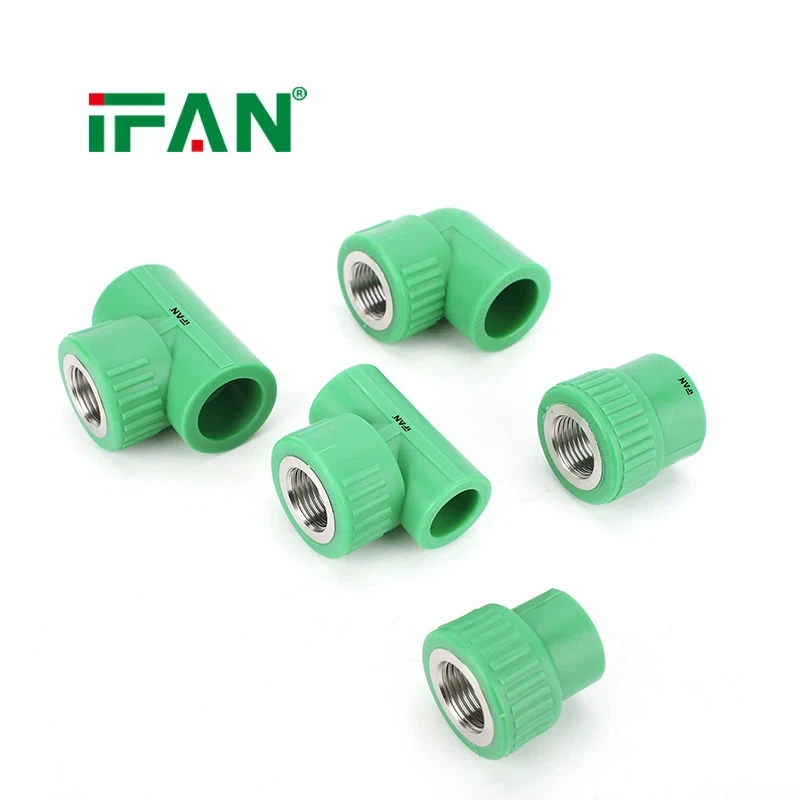
7. Ignoring the Corrosive Environment (304 vs. 316)
Installing the wrong grade of stainless steel PPR fittings for the environment is a significant strategic mistake. Using standard 304 stainless steel in a coastal or marine environment (where salt spray is present) will lead to pitting corrosion and premature failure. In these conditions, the more expensive but necessary 316 stainless steel (marine grade) must be used to ensure long-term durability.
8. Over-Tightening the Stainless Steel Threads
Stainless steel threads are hard and have a unique friction property that makes galling a serious risk . Overtightening the connection is a primary cause of galling, where the threads seize and cold-weld together, ruining the fitting. Unlike softer brass pipe fittings, stainless steel requires a controlled amount of torque. The correct technique is to hand-tighten, then use two wrenches for a final short turn, stopping immediately if resistance spikes.
9. Using the Pipe as a Lever to Align Threads
When trying to connect the stainless steel PPR fitting to an existing metal pipe or valve, a common mistake is to bend or force the long PPR pipe to make the threads align. The PPR pipe is flexible, but bending it imposes a constant, sustained stress on the stainless steel threads and the PPR body. This stress can cause the joint to loosen over time or the plastic to crack. The correct approach is to use a union fitting or adjust the metal pipe's position.
10. Disregarding Chemical Compatibility
While PPR has excellent chemical resistance, it is not universal. A serious installation error is using stainless steel PPR fittings with fluids like strong acids, chlorinated hydrocarbons, or high concentrations of free chlorine without first checking a chemical compatibility chart . These aggressive chemicals can attack the PPR polymer, causing it to swell, soften, or crack, leading to a catastrophic system failure.
Properly installing stainless steel PPR fittings requires avoiding these common errors. By focusing on clean, straight fusion, supporting the pipe for thermal movement, using two wrenches and correct sealant on the threads, and selecting the right material grade for the environment, you can ensure a durable, leak-proof installation that outperforms traditional brass pipe fittings or all-plastic alternatives in demanding applications.