
Regulatory Framework Governing Brass in Gas Systems
Brass fittings are legally permitted for use in natural gas and propane systems, but their application is governed by strict regulatory codes. Under the Illinois Administrative Code, brass pipe is explicitly permitted for natural gas piping, provided the gas does not contain excessive hydrogen sulfide (more than 0.3 grains per 100 standard cubic feet). This sulfide restriction is critical because "sour gas" accelerates corrosion in brass components.
In California, Title 8 regulations specify that joints in brass or copper pipe for gas systems must be welded, brazed, threaded, or flanged. Socket-type brass joints require brazing with silver-brazing alloy of at least 800°F melting point. These requirements ensure joint integrity under gas service pressures and temperatures.
The overarching standard is NFPA 54 (National Fuel Gas Code), which governs the installation of fuel gas piping systems and must be consulted for any brass fitting installation.
The Critical Sulfide Restriction
The single most important limitation on brass fittings is their vulnerability to hydrogen sulfide. When natural gas contains more than an average of 0.3 grains of hydrogen sulfide per 100 standard cubic feet, copper and brass pipe shall not be used.
This restriction exists because hydrogen sulfide reacts with the copper content in brass, forming copper sulfide. This chemical reaction weakens the metal's structure and can lead to pitting corrosion. For this reason, gas utilities must certify that their gas supply is "sweet" (low sulfide) before brass fittings are installed.
Dezincification: The Primary Corrosion Risk
Dezincification is a specific corrosion process affecting brass alloys containing zinc. In this electrochemical reaction, zinc selectively leaches out of the brass, leaving behind a weak, porous copper structure. This "copper sponging" dramatically reduces the fitting's mechanical strength and can lead to catastrophic failure.
For gas applications, dezincification-resistant (DZR) brass alloys are recommended. DZR brass, such as UNS C35330, contains added arsenic or other inhibitors that prevent zinc leaching. The material notes for DZR brass explicitly state it is "best suitable where potential corrosion (such as dezincification) may occur" for applications including valve spindles and fittings.
Water heaters and other gas appliances should use DZR-rated brass fittings to ensure long-term reliability in the presence of combustion byproducts and moisture.
Pressure and Temperature Ratings
Brass fittings used in gas lines must meet specific pressure and temperature ratings. PN16-rated brass fittings are designed for systems up to 16 bar (232 psi) pressure. Natural gas systems typically operate at much lower pressures (under 0.5 psi for residential service), while propane systems may reach higher pressures depending on the application.
Temperature ratings are equally important. DZR brass has a melting point range of 896-904°C (1645-1660°F), making it highly resistant to the heat generated by gas appliances. However, sustained high temperatures can accelerate dezincification, so proper ventilation and heat dissipation should be considered in system design.
Joint Types and Brazing Requirements
The California Code of Regulations specifies that joints in brass or copper pipe shall be welded, brazed, threaded, or flanged. For socket-type joints, brazing must be performed with silver-brazing alloy having a melting point of not less than 800°F.
This high-temperature requirement ensures the brazed joint can withstand the thermal and mechanical stresses of gas service without failing. Brazing creates a metallurgical bond between the fitting and pipe, providing superior strength compared to soldered joints. Threaded connections are also permitted but must be properly sealed with gas-rated thread sealant.
Flexible Gas Connectors: Historical Safety Concerns
The history of brass flexible gas connectors provides important lessons. Older uncoated brass connectors manufactured before 1976 used brazed joints that have proven prone to failure over time. The brazing can fail, causing serious gas leaks that may lead to explosions or fires.
Modern flexible connectors are fabricated from stainless steel or brass coated with plastic. Homeowners with uncoated brass connectors are advised to replace them with new stainless steel or plastic-coated brass connectors certified by the American Gas Association (AGA) and conforming to ANSI Standard Z21.24.
Even new connectors should be replaced every 10 years, as flexible connectors are not designed to last a lifetime.
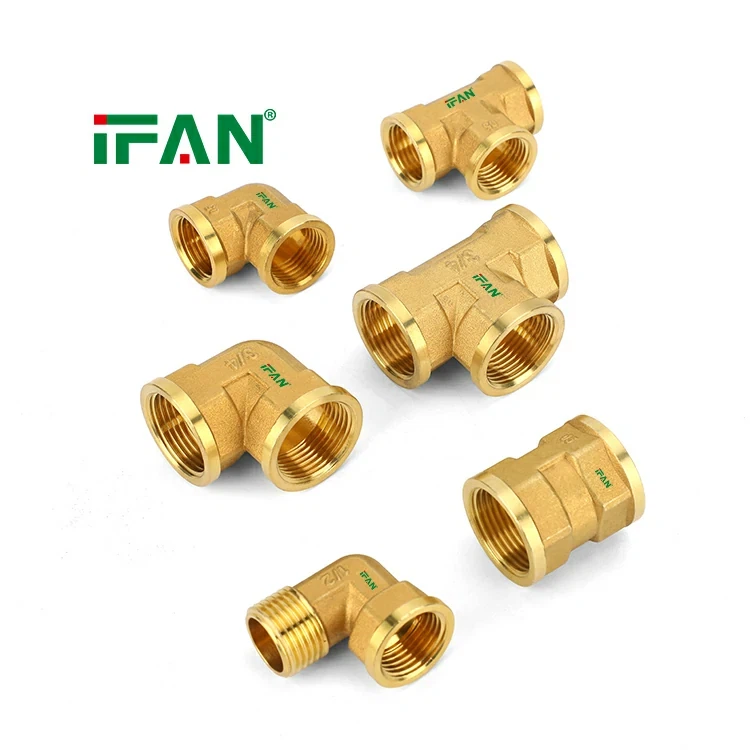
Appliance Connector Applications
Brass fittings are commonly used to connect gas appliances including:
Stoves and ranges
Dryers
Room heaters
Patio grills
Food service equipment
Portable gas-powered tools
For residential outdoor setups (patio grills, portable heaters) and commercial food service (food truck gas lines, catering equipment), brass gas connectors provide robust, corrosion-resistant connections that withstand outdoor and moist environments. The precision-engineered threading creates tight, stable connections resistant to loosening from vibration.
Natural Gas Compatibility
Brass is generally suitable for natural gas lines due to its corrosion resistance and durability. Natural gas does not react adversely with brass, making it a reliable material for these applications. Brass fittings provide a secure and leak-proof connection essential for safe transportation of natural gas.
However, the sulfide content limitation mentioned earlier still applies. Additionally, natural gas systems must comply with NFPA 54 and local building codes. Installers should always check that brass fittings are rated for natural gas service and not substituted from other applications.
Propane Compatibility
Brass can be used with propane gas, but it is crucial to ensure fittings are compatible with the specific gas composition and pressure levels. Propane has different properties compared to natural gas, affecting fitting performance over time.
Brass fittings used with propane must meet the necessary specifications for pressure and temperature ratings. Propane systems often operate at higher pressures than natural gas, particularly in liquid withdrawal applications. Installers should verify pressure ratings and ensure propane-compatible seals and compounds are used.
ANSI and Certification Requirements
Brass fittings for gas service should be certified by recognized standards organizations. Key standards include:
ANSI Z21.15 - Gas appliance connectors
ANSI LC 1 - Corrugated stainless steel tubing (CSST) systems
ASME B31.3 - Process piping requirements, covering materials, design, fabrication, assembly, and testing
Certification indicates the fittings have been tested and approved for specific service conditions, including pressure, temperature, and gas type.
Installation Best Practices
Proper installation is critical for safety. Always:
Use gas-rated thread sealant (yellow PTFE tape or approved pipe dope)
Apply sealant only to male threads, leaving the first thread exposed
Tighten connections with two wrenches to prevent stress on the fitting body
Test all connections with soapy water or electronic gas detector after installation
Never reuse old fittings or connectors
Brass fittings must be installed following manufacturer guidelines and industry best practices to prevent leaks. Improper installation is a leading cause of gas leaks, regardless of fitting quality.
Conclusion: Brass Fittings in Gas Systems
Brass fittings can be used for natural gas and propane lines when properly selected and installed. The material offers corrosion resistance, durability, and high-temperature tolerance. However, critical limitations must be observed:
| Factor | Requirement |
|---|---|
| Gas sulfide content | Below 0.3 grains/100 scf |
| Brass grade | DZR (dezincification-resistant) recommended |
| Joints | Brazed (min 800°F), threaded, or welded |
| Certification | ANSI/AGA certified for gas service |
| Thread sealant | Gas-rated PTFE or pipe dope |
For flexible connectors, modern stainless steel or plastic-coated brass units certified to ANSI Z21.24 are required, and units older than 10 years should be replaced. When these conditions are met, brass fittings provide safe, reliable service in gas distribution systems.