
Why Choose Us?
Advanced Equipment
German process equipment, each production line adopts the unified German process production standard, in line with SGS, BV and other quality management certification, standardized assembly and packaging, 27-person quality control team, 24-hour escort for product quality.
Rich Experience
IFAN factory started in 1993. And IFAN has workshop 120000 ㎡with 610 staff. In the past 30 Years, IFAN has never forgotten his mission-To protect health and safety.
Complete Range Of Products
IFAN can design and produce all plumbing pipe and fitting include PPR,PVC,CPVC PPSU HDPE PEXA PEXB PERT pipe and fitting ,brass fitting, brass ball valve ,heating system , gas system , sanitary faucets and hose.
High Quality Products
IFAN factory use best materials to produce high quality pipe and fittings with automatic production line and high tech quality control machines. The most important,IFAN can guarantee that all pipes and fittings manufactured by IFAN are qualified.
What Is Brass Fitting
Brass fittings are a type of plumbing fixture that is made out of brass, a type of metal. Brass fittings are used to connect two pieces of plumbing together. There are many different types of brass fittings, including brass couplings, elbows, brass tees, and caps.
-

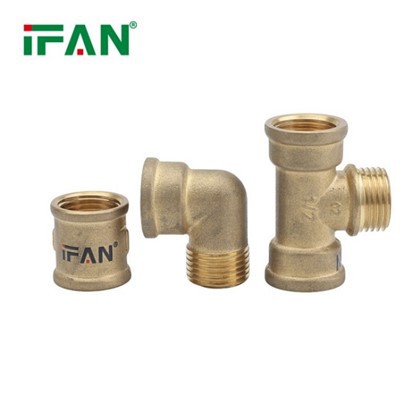
Brass Elbow Pipe Fittings
Type: Brass Elbow Pipe Fittings. Brand: IFAN. Connecting method: Threaded Connection. Applications: Cold & Hot Water. Color: Golden Color Add to Inquiry -
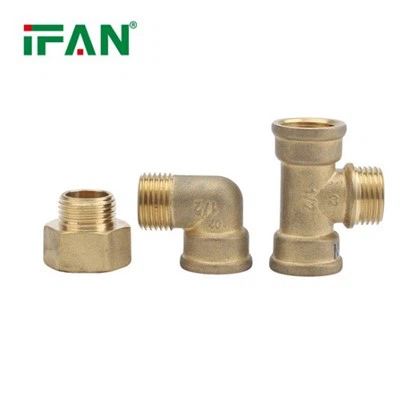
Brass Fittings Combine Strength And Versatility
Type:Brass Thread Fittings. Brand:IFAN. Connecting method:Thread. Applications:Water Systems. Color:Brass/Sliver/Double Color Add to Inquiry -
Precision-Made Brass Fittings For Custom Projects
Type:Brass Thread Fittings. Brand:IFAN. Connecting method:Thread. Applications:Water Systems. Color:Brass/Sliver/Double Color Add to Inquiry -
Brass Fittings Ideal For Automotive Applications
Type:Brass Thread Fittings. Brand:IFAN. Connecting method:Thread. Applications:Water Systems. Color:Brass/Sliver/Double Color Add to Inquiry -
Brass Fittings Maintain Tight, Secure Seals
Type:Brass Thread Fittings. Brand:IFAN. Connecting method:Thread. Applications:Water Systems. Color:Brass/Sliver/Double Color Add to Inquiry -
Brass Fittings Built For Extreme Conditions
Type:Brass Thread Fittings. Brand:IFAN. Connecting method:Thread. Applications:Water Systems. Color:Brass/Sliver/Double Color Add to Inquiry -
Dependable Brass Fittings For Air Compressors
Type:Brass Thread Fittings. Brand:IFAN. Connecting method:Thread. Applications:Water Systems. Color:Brass/Sliver/Double Color Add to Inquiry -
Brass Fittings Ensure Stable Fluid Performance
Type:Brass Thread Fittings. Brand:IFAN. Connecting method:Thread. Applications:Water Systems. Color:Brass/Sliver/Double Color Add to Inquiry -
Easy-to-Install Brass Fittings For Contractors
Type:Brass Thread Fittings. Brand:IFAN. Connecting method:Thread. Applications:Water Systems. Color:Brass/Sliver/Double Color Add to Inquiry -
Highly Practical Brass Fittings
Type:Brass Thread Fittings. Brand:IFAN. Connecting method:Thread. Applications:Water Systems. Color:Brass/Sliver/Double Color Add to Inquiry -
Long Service Life Brass Fittings
Type:Brass Thread Fittings. Brand:IFAN. Connecting method:Thread. Applications:Water Systems. Color:Brass/Sliver/Double Color Add to Inquiry -
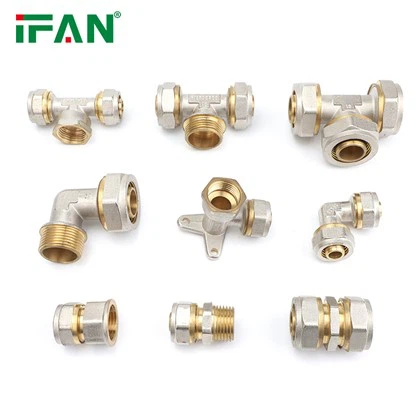
Avoid Costly Repairs In Tight Corners
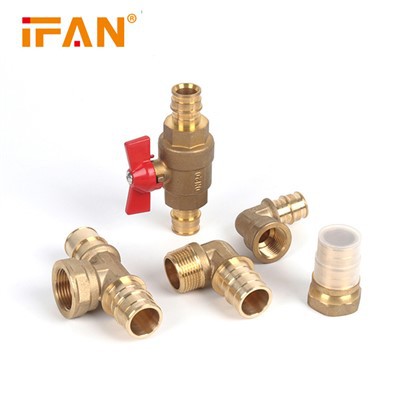
Type:IFNA PEX Pipe Fittings. Brand:IFAN/OEM. Applications:Potable Water Systems/Radiant Heating Systems/Hydronic Heating Systems/HVAC Systems/Geothermal Systems. Color:Silver,Double Color Or Add to Inquiry




What Are the Different Types of Brass Fitting
All the plumbing and piping systems that are used in various commercial & industrial applications eventually require brass fittings. Brass fittings are available in different shapes & sizes, and they can also be costly. Also, there are hundreds & thousands of specialized fittings getting manufactured every day. Each & every type of pipe or tube needs a similar kind of fitting, but in a broader perspective, all brass fittings share few ordinary features with each other.
It is pretty evident that brass fittings are affixed at the end of pipes in order to enable them to regulate the flow, shift direction, and modify the diameter of the pipe.
There are numerous types of brass fittings available in plumbing systems for different objectives and purposes. Brass fittings are utilized in plumbing systems to combine multiple pipes of similar stature or even different sizes to control the flow or being able to gauge the flow.
Here are the 4 different types of brass fittings given below:
Elbow Brass Fittings
Elbows are genlly utilized to make a shift in the direction of the flow between two pipes. Elbow brass fittings are mainly available with an angle of 22.5°, 45° or 90°. If the pipes are of the exact same diameter, then normal elbows are preferred, or else reducer elbows are utilized. Elbows are prepared using different types of substances. These usually come up with female threads and can be fixed easily by socket or butt welding as well.
Tee Type Brass Fittings
Tee type brass fitting is a part of the plumbing system, which is basically in the form of a t-shape. It comprises one inlet and two outlets, and the outlets are organized at 90° to the central line connection, i.E. Inlet. This type of brass fitting can also be used for combining the flow from two inlets to a single outlet. If the three sides of t-fitting are of the same sizes, then it is known as "equal tee", and if it's not the same, it is called "unequal tee". Moreover, these are readily available in different sizes as well as different materials.
Reducer Brass Fittings
Reducer is a brass fitting element that helps in reducing the flow size from larger to smaller by curtailing the size of the pipe. Also, there are two types of reducer brass fittings available in the market. The first one is called a concentric reducer, which is cone-shaped and gradually diminishes around the pipe, but in this particular case, there's a high chance of air being accumulated which may result in cavitation. The second is known as eccentric reducer, which has one edge parallel to the connecting pipe and due to which accumulation of air is just impossible.
Coupling Brass Fittings
Coupling brass fittings are mainly utilized to connect the pipes that share the same diameter. Coupling is also beneficial when there is a problem of leakage or if the pipe is broken. Typically, there are two types of coupling brass fittings available - compression coupling and slip coupling.
Compression coupling is a normal coupling which is fused between two pipes, and it is highly useful in preventing leakage because the arrangement of gaskets or rubber seals is done on both sides, or else glue is provided, one can use that.
Slip coupling is simpler to put in, and it includes two pipes which are organized as one into another, where the inner pipe can be elevated up to some extent. So, a long length damaged pipe can be fixed by using slip coupling.
Top 5 Benefits of Using Brass Fittings in Your Project
The effectiveness of this metal in plumbing allows you to provide safe, durable components to your plumbing system. If you're wondering how well brass will work in your system, here are five awesome benefits to take into considtion when planning your next project or expansion.



Wide Versatility
Because brass is used for so many different purposes, you can get the fittings you need in a side range of shapes, widths and sizes, with fittings available that allow you to alter pipe size. When you're working with an project that has very strict specifications, brass delivers. It also enhances the efficiency of your water delivery lines into your home. If you need to have fittings exposes, brass is finished in a variety of different ways, whether lacquered, polished, plated in chrome or given a nickel or antique finish.
Durability
Because of its many other working properties, brass is a metal that is highly durable. When a plumbing system needs a long service life, brass fittings are an excellent choice as they remain in great condition for years without cracking or disintegrating. It also provides the best possible performance in hot water supply lines.
Tolnce Of High Temptures
Brass is the best fitting material for hot water distribution systems, as they provide exceptional conductivity of tempture and improve hot water distribution system efficiency. Brass is very ductile in high temptures, and can withstand much higher temptures than other options, to the point of being among the only surviving items in a serious house fire.
Resistance To Corrosion
Other metal fittings can have serious corrosion issues, but brass is second to none in terms of corrosion resistance. Corrosion and rust can cause serious wear and tear on metal fittings, so a corrosion-free metal is the best option in these situations. Places with corrosive water properties get the best benefit of brass fittings, which do not rust or corrode in poor water pH conditions. Even the worst corrosive water won't cause corrosion in brass.
Very Malleable
When it comes to fittings that will require bending or shaping, brass provides great malleability, making it easier to alter than steel or iron pipe. It also molds better than most materials on the market. If you've ever had to deal with a plumbing job that is a little off, you know how important this property can be, helping reduce labor costs due to its ease of working. Even though the metal is malleable, it still retains serious durability and dependability.
Brass makes a great material for your plumbing or waterworks system, providing years of dependable, reliable service without the risks of corrosion or heat while providing a quality fitting to get the job done.
Grades of Brass Fitting
Brass is an alloy made up of copper and zinc and it is a non-ferrous metal. offering consists of red brass meaning its appearance has a hint of red, and yellow brass which looks golden. A popular yellow brass is alloy 272 which contains 37% zinc and 62-65% copper. Comparatively, red brass are alloys that have substantially lower zinc content and higher copper content. Sevl refer to red brass as bronze, adding tin to a red brass melt is essentially what makes up bronze.
There are sevl grades of brass. Below are just a few specifically related to plumbing and waterworks applications:
● C84400 is an alloy that contains up to 7% lead that was traditionally used in plumbing applications. This has good casting and machining properties. It is also a cost-effective solution for load bearings.
● C83600 is another widely used leaded alloy. Like C84400, this also has good casting and machining properties and was used in a wide variety of plumbing and waterworks applications prior to the adjustment of the fedl definition of lead-free.
● C898833 is the lead-free compliant alloy as per government regulations for potable water applications that features bismuth as a primary substitute for lead and high copper content.
● Alloy 360, known as free cutting, is the most common yellow brass alloy. This is traditionally used for pipe production. It does contain lower amounts of lead compared to leaded red brass alloys which makes it acceptable for cold working.
Applications of Brass Fitting
Brass fittings are used in hydraulic, pneumatic, instrumentation and plumbing systems. Common applications include instrumentation gas and chemical transfer, air compressor piping, mobile equipment, packaging equipment, machine tools and various non-potable water plumbing applications.
Although brass is not as common as carbon or stainless steel in fluid power applications, it is still an extremely useful material for hydraulic and pneumatic hose and tubing applications in corrosive environments.
Brass fittings are typically used for connections that carry chemicals, non-potable water, slurries and flammable gases. Brass fittings are also used in many automotive and truck applications-- from fuel lines to air brakes and other hose ends.
How to Measure Brass Fittings
Brass fittings must have inside diameters that are large enough to fit over the outside diameter of a pipe. Usually, a half-inch fitting will have an outside diameter of around 1.25 inches.
The best way to determine the nominal pipe size you need is to measure the outside diameter and convert to nominal.
There are sevl ways you can measure the outside diameter of the pipe. If you're able to simply measure a sawed-off end, then that's easy enough. But if the pipe is still in position, you'll need to get a little creative.
Wrap a string around the pipe (if it's a male thread) and mark where the string touches. Determine the length between the end of the string and the touch point, which gives you its circumference. To get diameter, divide the circumference by pi (3.14159). You may need to convert decimal to fraction.
If it's a female thread, you'll instead measure the inside diameter of the pipe or brass fitting using a tape measure or ruler, and use that measurement to determine the nominal diameter. You can find charts online that give you an easy way to transfer decimals to nominal diameters and vice versa, as well as the number of threads per inch (in case that information is important for your project).
How to Choose the Right Brass Fittings
Understand The Requirement: Begin by clearly identifying the purpose of the fitting. Are you looking for a plumbing connection, a gas line joint, or perhaps a fixture for heating systems? The specific use will dictate the type of fitting you need.
Check The Size And Specifications: Ensure the fittings are of the right size for your project. With various dimensions available, it's crucial to select one that fits seamlessly. Offers a comprehensive range, ensuring you find the perfect match for your needs.
Superior Quality: Not all brass fittings are created equal. At , our fittings undergo rigorous testing, adhering to the highest industry standards. Always prioritise quality to ensure longevity and safety.
Ask For Expert Advice: If in doubt, consult with our experts. With years of experience and in-depth knowledge, our team at can provide insights and recommendations tailored to your project's specific needs.
Aesthetics And Functionality: Especially for visible installations, consider the design and finish of the fittings. Offers a range that doesn't compromise on aesthetics while maintaining superior functionality.
Brass fittings might be small components in the grand picture of infrastructure, but their importance is undeniable. As with many things in life, the strength of a structure lies in its connections.
Our Factory
IFAN factory started in 1993. And IFAN has workshop 120000 ㎡with 610 staff. IFAN can design and produce all plumbing pipe and fitting include PPR,PVC,CPVC PPSU HDPE PEXA PEXB PERT pipe and fitting ,brass fitting, brass ball valve ,heating system , gas system , sanitary faucets and hose, In the past 30 Years, IFAN has never forgotten his mission-To protect health and safety. And IFAN factory use best materials to produce high quality pipe and fittings with automatic production line and high tech quality control machines. The most important,IFAN can guarantee that all pipes and fittings manufactured by IFAN are qualified.


Our Certificates

FAQ
We're professional brass fitting manufacturers and suppliers in China, featured by good service and competitive price. Please rest assured to buy or wholesale high quality brass fitting for sale here from our factory. Contact us for free sample.
