
Yes, but Grade Selection Is Critical for Marine Success
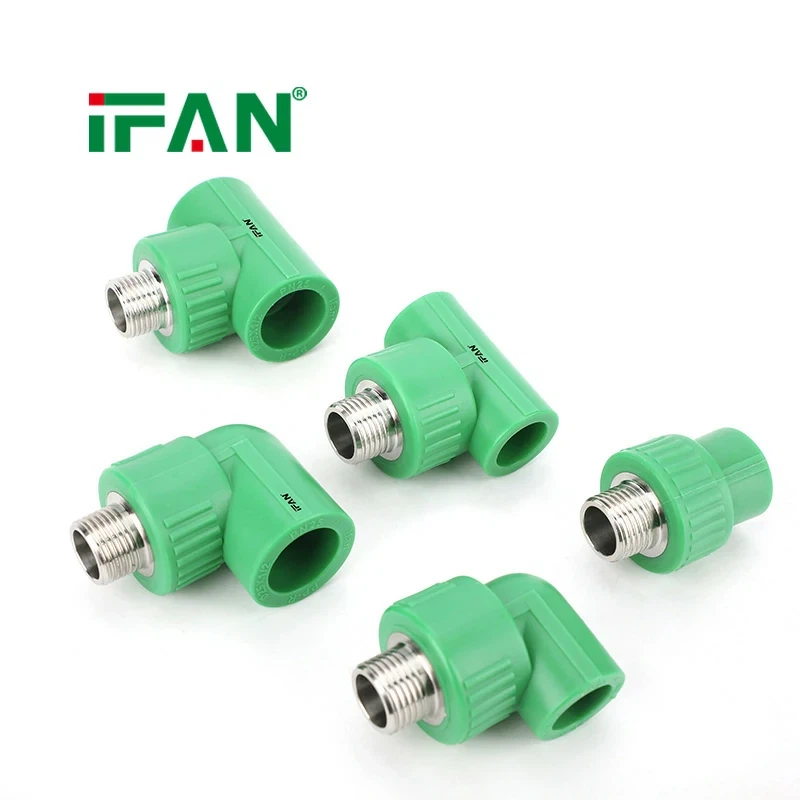
Stainless steel PPR fittings can be used effectively in both outdoor and marine environments, provided the correct grade of stainless steel (specifically 316) is selected. While the PPR body offers excellent UV resistance and chemical stability, the stainless steel threads must be chosen to withstand the specific corrosive challenges of saltwater and weather exposure .
This guide explains the performance of these hybrid fittings in demanding outdoor and marine settings.
The Environmental Challenge: Why Outdoor and Marine Are Demanding
Outdoor and marine environments are particularly aggressive to piping materials. Saltwater contains dissolved chlorides that attack metal surfaces, accelerating corrosion . The marine environment also subjects fittings to extreme temperature variations, causing expansion and contraction stress. Additionally, continuous exposure to UV radiation degrades many plastics, while high humidity, waves, and vibration add further mechanical stress . These combined factors demand a material choice that can resist corrosion, thermal stress, UV degradation, and physical forces simultaneously.
The PPR Body: Excellent for Outdoor Conditions
The PPR (polypropylene random copolymer) body of stainless steel PPR fittings is naturally well-suited for outdoor applications. PPR can withstand temperatures from -20°C to 95°C (-4°F to 203°F) , making it capable of handling extreme weather variations . It is also formulated to be UV-stabilized, meaning it resists the chalking, cracking, and embrittlement caused by prolonged sunlight exposure .
Importantly, the plastic body is completely immune to electrochemical and salt corrosion, providing a durable structural backbone for the fitting . This makes the PPR component itself highly reliable for long-term outdoor use without degradation.
The Stainless Steel Threads: Where Grade Selection Is Critical
The vulnerability of stainless steel PPR fittings in harsh environments lies entirely with the metal threads. While all stainless steel resists rust, different grades offer vastly different levels of protection against saltwater.
Grade 304 Stainless Steel: This common grade has good general corrosion resistance. However, it is vulnerable to pitting and crevice corrosion in chloride-rich environments like salt spray or direct seawater contact . For this reason, 304 is not recommended for coastal or marine applications.
Grade 316 Stainless Steel (Marine Grade): Often called "marine grade," 316 contains molybdenum, which significantly enhances its resistance to chlorides . For any outdoor installation within 2 km of the ocean, or for any application involving direct contact with saltwater, 316 stainless steel is the required and superior choice . It forms a more stable passive layer that withstands the corrosive attack of salt.
Performance Comparison: 304 vs. 316 for Marine Use
To illustrate the difference in marine suitability, the table below compares the performance of these two stainless steel grades in harsh environments:
| Environment | Grade 304 Stainless Steel Performance | Grade 316 Stainless Steel Performance |
|---|---|---|
| Inland/Standard Outdoor | Excellent – sufficient for rain and weather | Excellent – but over-specified for standard use |
| Coastal (Salt Spray) | Vulnerable to pitting corrosion | Excellent – recommended for coastal installations |
| Direct Seawater Contact | Not recommended – risk of rapid pitting | Good – withstands saltwater exposure |
| Industrial Chemical Exposure | Moderate – depends on specific chemical | Excellent – superior chemical resistance |
Recommended Applications for Each Grade
Choose Base/304 Grade (Standard Outdoor) For:
Garden hose connections and irrigation lines
Outdoor water supply in non-coastal areas
Rooftop piping installations away from salt spray
General exposed plumbing where no chlorides are present
Choose Advanced/Pro Grade (316 Grade) For:
Coastal homes, marinas, and beachfront properties
Direct seawater intake or discharge lines
Boat and shipboard plumbing systems
Chemical processing plants near the sea
Swimming pool systems with salt-chlorination
Installation and Maintenance Best Practices
Even with the correct grade, proper installation is essential for longevity. When tightening stainless steel PPR fittings, use two wrenches to prevent torquing the plastic body . Apply thread sealant (PTFE tape) to the metal threads, ensuring no tape overhangs into the waterway . For 316 stainless steel in marine settings, also use an anti-seize lubricant on the threads to prevent galling.
Regular maintenance is also required, especially in marine applications. The self-healing passive layer on stainless steel protects the metal, but inspections should be performed periodically for crevice corrosion at the thread root. Even 316 stainless steel can suffer localized attack if debris or salt is trapped in tight spaces .
Comparison with Traditional Materials
To understand the value of stainless steel PPR fittings, compare them to the alternatives often used outdoors.
Compared to Brass: Standard brass pipe fittings are vulnerable to dezincification (zinc leaching) in saltwater and aggressive outdoor conditions. Stainless steel (especially 316) is far superior for marine environments.
Compared to Copper: Copper is resistant to general corrosion but is very expensive and susceptible to pitting from saltwater. It is also heavier and requires soldering, making it less ideal than hybrid stainless steel PPR for direct burial or exposed salt spray.
Compared to Standard PPR (All-Plastic): While the plastic is corrosion-proof, standard PPR fittings lack the metal threads needed for a strong connection to pumps or fixtures, and are not UV-stabilized in their base form . The hybrid design provides the best of both worlds.
Conclusion
Stainless steel PPR fittings are fully suitable for outdoor and marine environments, but the right material grade must be selected. The PPR body provides excellent UV and weather resistance, while the stainless steel threads offer the necessary mechanical strength.
For standard outdoor use away from salt, high-quality 304 stainless steel PPR fittings are a reliable and cost-effective choice . For coastal installations, direct seawater contact, or aggressive chemical exposure, it is essential to upgrade to 316 stainless steel fittings (often labeled as "Pro" or "Marine Grade") to prevent pitting corrosion and ensure a long service life .
By matching the material grade to the environment, these hybrid fittings provide a leak-proof, durable solution that far outlasts traditional metal or all-plastic alternatives in demanding outdoor settings.