
Laying the hydropower system is a big problem that every family faces in the process of home improvement. The types of water pipe materials on the market continue to increase, and it is impossible to choose the ideal household water supply pipe for a while. Therefore, the following IFAN will introduce the comparison of advantages and disadvantages of 7 commonly used water supply pipelines, hoping to be helpful to users in hydropower decoration.
In a literal sense, the water supply pipe is also a material opposite to the drainage pipe. It refers to the pipe material required for tap water or water delivery projects that can withstand a certain water supply pressure. There are many types of water supply pipes, seven of which are common. Water supply pipes: PPR water pipes, copper pipes, aluminum-plastic pipes, galvanized pipes, pvc pipes, pvc-lined galvanized steel pipes, thin-walled stainless steel pipes.
1. PPR water pipe: now it is the mainstream new pipe material, which is suitable for the improvement of various household use environments, such as antibacterial ppr pipes, antifreeze ppr pipes, etc., due to its sanitation, non-toxicity, light weight, corrosion resistance and high temperature, convenient construction, and a life span of long-term durability according to standards Many advantages such as the above are supported, but the ppr pipe also has certain defects, that is, when the hot-melt connection is made, the water flow will be reduced if the heating time is too long, resulting in blockage of the water pipe. Operating ppr plumbing construction requires some training.
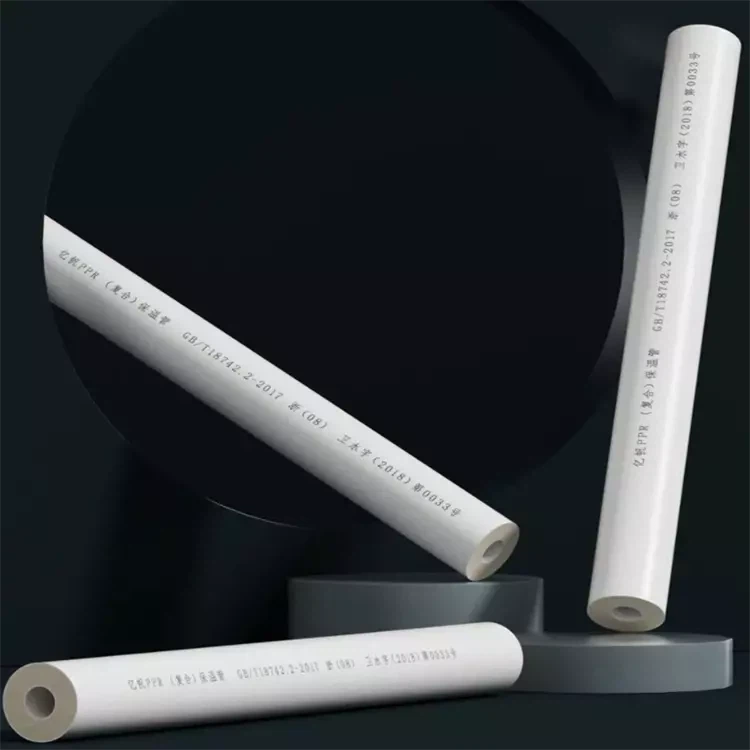
2. Copper pipe: It can be said to be the top grade in water pipes. It has stable performance, no corrosion, no leakage, and is favored by high-level people because copper can also inhibit bacteria. Of course, this is also due to the fact that copper pipes are not only difficult to construct, but also expensive, so they generally only appear in villas.
3. Aluminum-plastic pipe: the most popular pipe in the market. Lightweight, durable and easy to construct.
4. Galvanized pipes: Galvanized pipes have been banned since 2000. At present, such pipes are rarely used in newly built communities.
5.PVC pipe: a plastic pipe, connected by glue. The ability to resist freezing damage is poor, and the heat resistance is poor, so it is difficult to use as a hot water pipe. Most of the time, it is used on electrical conduits and sewage pipes. In addition, it contains the chemical additive phthalein, which has a great impact on human organs, can cause cancer and damage the kidneys. It is recommended to use less.
6. PVC-lined galvanized steel pipe: the plastic pipe is also a metal pipe, with high strength, good rigidity and corrosion resistance. By screw connection. Due to the small diameter of the pipe, the temperature of the environment and the medium changes greatly, and it is easy to produce delamination and reduce the quality of the pipe.
7. Thin-wall stainless steel pipe: corrosion resistance, impact resistance, low thermal conductivity, long service life, maintenance-free, but expensive, adopt stainless steel models resistant to chloride ions in water.