
The Golden Rule: Never Use Force Alone
When a brass fitting is stuck, the instinct to force it with a longer wrench is strong. This is almost always a mistake . Forcing a stuck fitting is the primary cause of thread damage, rounding of the wrench flats, and cracking of the fitting body. The goal is always to break the bond, not to overpower it.
The Anatomy of a Stuck Fitting
A brass fitting gets stuck for two main reasons. The first is galvanic corrosion (rust welding). When brass is connected to steel or iron, the metals react electrochemically, fusing the threads together. The second is physical jamming from debris or mineral deposits. Identifying the cause guides your next step, but heat and penetrating oil work for both.
Step 1: Apply Penetrating Oil (Let It Soak)
Penetrating oil (such as PB B'laster or Liquid Wrench) is your first tool. Apply a generous amount to the seam where the threads meet. The key is time. Let the oil soak for at least 15-30 minutes. If the fitting is badly corroded, apply the oil several times over a few hours. The oil seeps into the microscopic gaps between the threads and lubricates the seized surfaces.
Step 2: Heat the Fitting (The Most Effective Method)
Brass fittings expand when heated. For most stuck fittings, heat is the most effective solution . Use a heat gun or a propane torch. Heat the female fitting (the nut or the body) directly. Do not heat the bolt or male threads. The goal is to make the outer part expand away from the inner part. If you use a torch, keep the flame moving constantly to avoid melting the brass. After heating for 30 seconds, try to turn the fitting while it is still hot.
Step 3: Use Two Wrenches Correctly
You must use two wrenches to remove a stuck brass fitting. One wrench holds the stationary fitting or pipe. The other wrench turns the stuck fitting. This prevents the torque from twisting other connections. Using a single wrench forces you to put all the stress on the fitting itself, which can twist and break the pipe.
Step 4: Turn the Fitting in the Right Direction
It sounds basic, but when you are looking from behind, it is easy to get confused. Always turn the fitting counter-clockwise (left) to loosen it. If it will not budge, try tightening it slightly (clockwise). Even a 1/8 turn can break the corrosion bond. Once it has moved even a tiny amount, you can often loosen it by hand.
Step 5: How to Deal with a Stripped Nut
If the wrench flats are already damaged, you need a different grip. Try using vice grips (locking pliers) clamped down extremely tight. You can also use a pipe wrench. A pipe wrench is designed to grip round objects; the teeth bite into the brass tighter as you pull. Note: A pipe wrench will damage the surface finish of the brass fitting, but it will remove it.
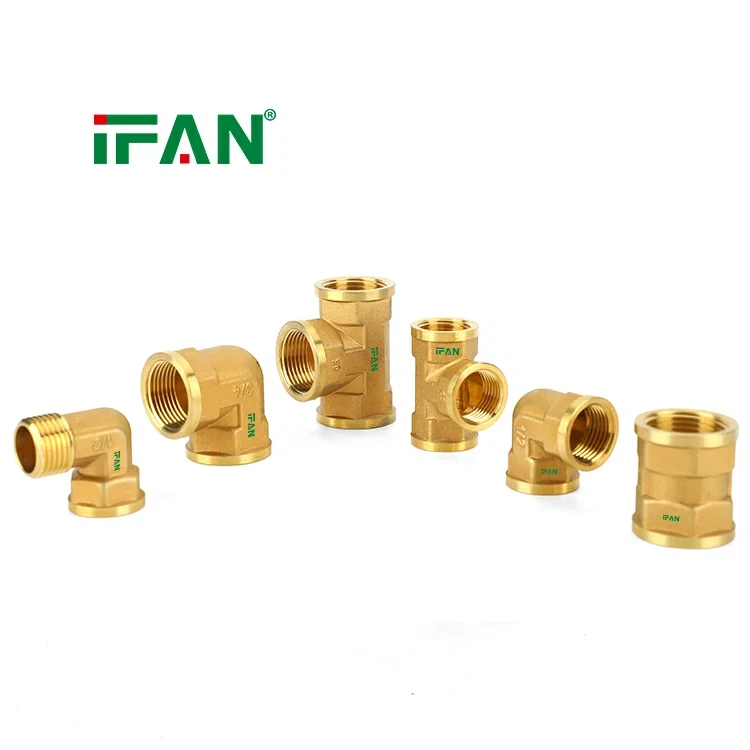
Step 6: Cutting the Fitting as a Last Resort
If the fitting remains frozen, you must cut it off. Use a hacksaw or a Dremel with a metal cutting disc. Cut lengthwise along the nut of the brass fitting (parallel to the pipe). Stop cutting as soon as you see the pipe threads. You are scoring the brass, not cutting through it. Then, insert a flathead screwdriver into the cut. Twist the screwdriver to pry the cut open. The brass is brittle and will crack, releasing its grip on the pipe.
Step 7: Special Method for Compression Fittings
A brass compression fitting has a brass ring (ferrule) that is squeezed onto the pipe. If the nut is off but the ring is stuck on the pipe, cut the pipe directly behind the ring . Or, use a specialized puller tool. Do not try to pry the ring off; you will dent the copper pipe. Alternatively, hold the fitting body with one wrench and the nut with another. Try tightening the nut just a hair (1/8 turn) before loosening it.
Step 8: Cleaning the Pipe Threads After Removal
Once the old brass fitting is off, you must clean the pipe threads . Use a steel wire brush. Do not use sandpaper; you want to remove debris, not damage the sharp thread peaks. Inspect the threads closely. If they are damaged, you may need to rethread them. Apply fresh Teflon tape (wrap clockwise, 3-5 wraps) before installing the new fitting.
Step 9: The Use of a "Thread Restorer" Tool
If the threads on the brass fitting are galled (smoothed over) but not completely gone, do not run a standard die over them. Standard taps and dies cut new threads, which can weaken the brass . Instead, use a "thread restorer" file or a rethreading die. These tools are designed to reform existing threads without removing significant material.
Step 10: Preventing Future Seizure
To prevent a brass fitting from seizing again, use anti-seize compound on the threads during reassembly . For brass, a copper-based or nickel-based anti-seize is ideal. This prevents galvanic corrosion and acts as a lubricant for the next person who needs to work on the system. Alternatively, ensure you use Teflon tape correctly, as it provides a barrier between the brass and the mating material.
Summary of Tools for Removing Stuck Fittings
Penetrating oil: For lubrication
Heat gun or propane torch: For expansion
Two wrenches: For leverage and protection
Vice grips or pipe wrench: For stripped nuts
Hacksaw / Dremel: For cutting
Following these steps, you can remove a corroded brass fitting without stripping the threads. Patience and the correct application of heat are the most critical factors. If you rush, you will inevitably round the nut or snap the fitting. With preparation and the right tools, even fittings that look fused together can be removed cleanly, preserving the costly pipe for reuse.