
The Short Answer: Yes, But Only for Low to Medium Pressure Systems
Brass fittings can be used in hydraulic systems, but they are generally limited to low-pressure and medium-pressure applications . For high-pressure hydraulics, steel or stainless steel fittings are the industry standard due to their superior strength and durability .
Why Steel is the Standard in High-Pressure Hydraulics
The go-to material for high-pressure hydraulic fittings is forged carbon steel . Forging produces a denser, stronger material with a better grain structure-this is essential for handling the extreme pressures and stresses found in hydraulic systems .
High-pressure steel fitting characteristics:
Forged construction creates superior grain alignment
Often heat-treated (normalized, quenched, tempered) to enhance strength
Typically coated with zinc or zinc-nickel for corrosion resistance
Can withstand pressures exceeding 6,000 PSI
Steel fittings are typically closed-die forged, which uses two dies that close together to squeeze the steel into its blank shape . This manufacturing process is crucial for achieving the mechanical properties required in demanding hydraulic environments.
The Role of Brass in Hydraulics
Brass fittings are primarily used in low-pressure hydraulic systems and pneumatic systems . The soft nature of brass makes it unsuitable for high-pressure hydraulics-not necessarily because the fitting will burst, but because the threads are likely to fail .
Primary brass applications in fluid power:
| Application | Suitability | Reason |
|---|---|---|
| Pneumatic systems (air) | ✅ Excellent | Low pressure, good sealing properties |
| Low-pressure hydraulics | ✅ Suitable | Up to ~1,000-3,000 PSI depending on alloy |
| Medium-pressure hydraulics | ⚠️ Limited | DZR brass may be acceptable |
| High-pressure hydraulics | ❌ Not recommended | Thread failure risk, lower tensile strength |
Brass remains the top choice for DOT-approved brake lines in the on-highway machinery industry, demonstrating its value in moderate-pressure fluid power applications .
Pressure Ratings for Brass Hydraulic Fittings
The pressure capacity of brass fittings varies significantly based on the specific alloy and design.
Typical pressure ratings:
| Brass Fitting Type | Pressure Rating | Application |
|---|---|---|
| Standard brass hydraulic fittings | 1,000 - 3,000 PSI | Low to moderate pressure systems |
| DZR brass compression fittings | Up to 550 bar (7,977 PSI) | Medium-pressure hydraulic applications |
| General purpose brass fittings | Up to 10 bar (145 PSI) | Air, water, oil, gas |
| Clamp union brass tee | 250 PSI | Air, water, fuel, oil, hydraulic fluid |
A brass fitting with a working pressure of 250 PSI is suitable for hydraulic fluid in low-pressure circuits . More robust DZR brass compression fittings are rated for vacuum up to 550 bar for use with hydraulic oil and other industrial fluids .
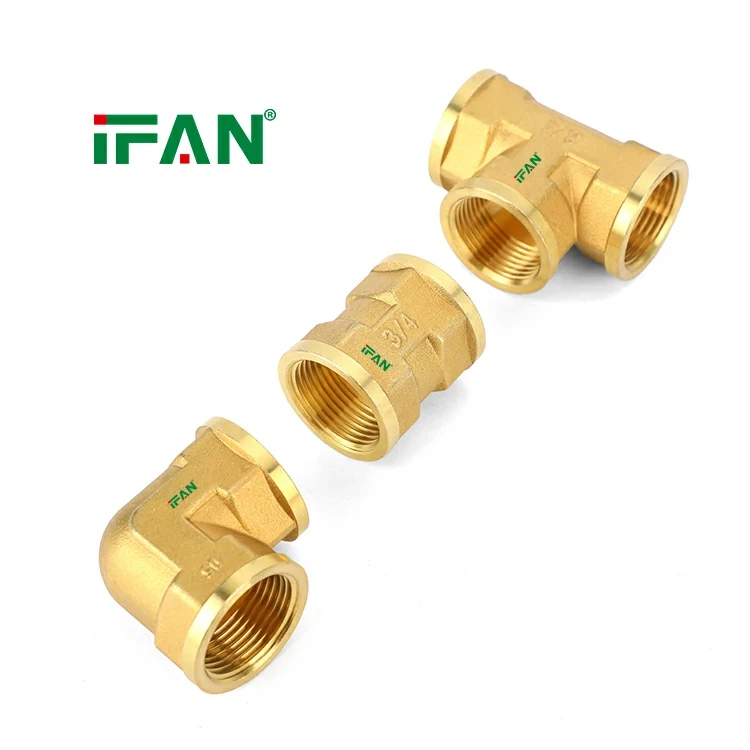
The Thread Failure Problem in High Pressure
The primary limitation of brass fittings in high-pressure hydraulics is thread integrity. Because brass is relatively soft, it cannot withstand the same thread stresses as hardened steel .
Potential failure modes for brass in high pressure:
Thread stripping - The threads may shear off when subjected to high torque or pressure
Galling - The soft brass can seize onto mating steel threads
Erosion - Fluid flow can erode brass over time, especially with caustic fluids
A failed thread may pop out of the port, or more commonly, simply leak under pressure . This is why brass fittings are generally not recommended for high-pressure hydraulic systems where steel or stainless steel are preferred for their durability and resistance .
Advantages of Brass for Hydraulic Applications
Despite pressure limitations, brass fittings offer significant advantages in appropriate hydraulic applications:
Corrosion resistance: Brass naturally resists corrosion in most environments, including exposure to water, air, and many hydraulic fluids . Unlike carbon steel, brass does not require protective coatings to prevent rust.
Machinability: Brass is extremely easy to machine, exerting low wear on CNC tooling . This makes it economical to produce in high quantities-brass is one of the only materials where fittings are machined directly from billets rather than requiring castings or forging blanks .
Compatibility with various fluids: Brass fittings are compatible with many industrial fluids including water, machining oil, fuel, hydraulic oil, compressed air, chemical fluids, and disinfectants .
High-temperature tolerance: Brass can withstand temperatures up to 250°C (482°F) or even 265°F depending on the specific product, making it suitable for hot fluid applications .
The Importance of DZR Brass
For hydraulic applications, look for DZR (Dezincification Resistant) brass fittings . These are specially formulated and heat-treated to prevent corrosion, resulting in plumbing that is more resistant to failures, leaks, and system ruptures .
DZR brass benefits:
Prevents zinc leaching in aggressive water conditions
Provides longer service life under pressure
Resists corrosion in saltwater and marine environments
Suitable for potable water, heating, compressed air, and hydraulic systems
High-quality brass tube fittings carry a DRZ or DR symbol, indicating dezincification-resistant certification .
When to Choose Brass vs. Steel Hydraulic Fittings
| Factor | Brass Fittings | Steel Fittings |
|---|---|---|
| Pressure capacity | Low to medium (1,000-3,000+ PSI) | High (6,000+ PSI) |
| Corrosion resistance | Excellent naturally | Requires coating |
| Machinability | Excellent (low tool wear) | Moderate (higher tool wear) |
| Cost | Moderate | Moderate to high |
| Weight | Higher than aluminum | High |
| Best applications | Pneumatics, low-pressure hydraulics, brakes, fluids | High-pressure hydraulics, industrial systems |
Select the appropriate material for high-pressure hydraulic systems by balancing technical requirements, cost considerations, and application-specific demands . While brass fittings offer excellent corrosion resistance and machinability, they typically fall short in tensile strength compared to steel, making them prone to deformation under extreme stress .
Summary
Brass fittings are suitable for hydraulic systems, but only under specific conditions. They excel in:
Low-pressure hydraulic circuits (up to ~1,000 PSI)
Pneumatic systems (compressed air)
Brake lines (DOT-approved)
Medium-pressure hydraulics with DZR brass (up to 550 bar)
For high-pressure hydraulic applications (exceeding 3,000 PSI), forged carbon steel or stainless steel fittings are the appropriate choice due to their superior tensile strength and thread integrity .