


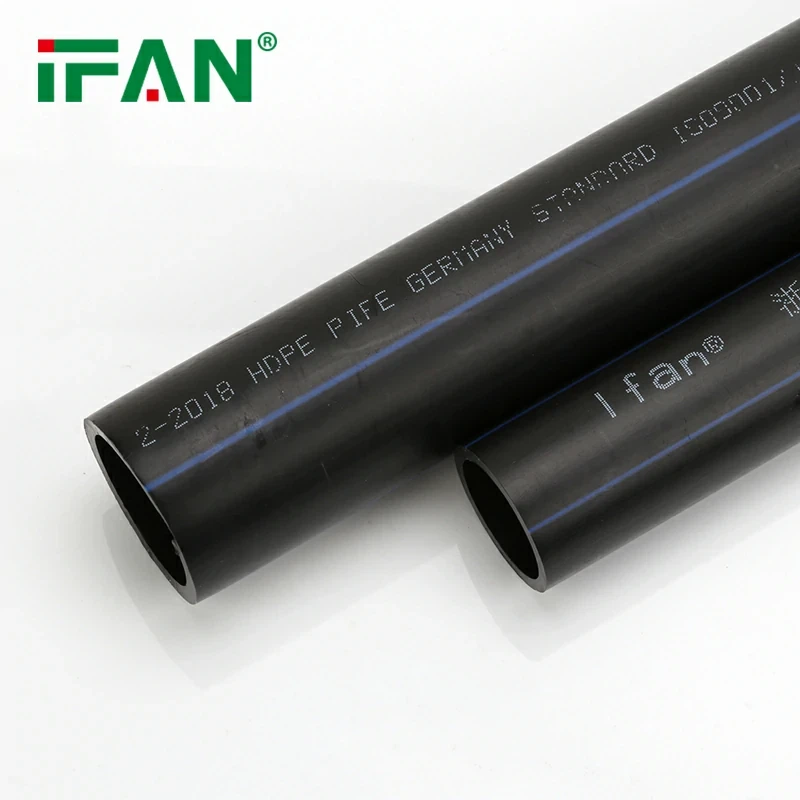


HDPE Pipe For Wastewater Management Systems
Introduction
Wastewater management systems require reliable piping to collect, convey, and discharge various types of liquid waste. HDPE pipes are widely used in urban, industrial, and rural wastewater networks. These systems involve the movement of sewage, stormwater, and industrial effluent from source points to treatment plants or discharge areas. Pipes must handle high flow volumes, suspended solids, and aggressive fluids. HDPE is used in gravity and pressurized networks across all system stages. This article outlines specific uses of HDPE pipe in wastewater collection, pumping, treatment, and outfall systems.

| Product Name | IFAN HDPE Pipe |
| Size | 20-630mm Or Customized |
| Color |
Black Or Customized |
| Package | IFAN standard packaging |
| Features | Durable |
| Sample | Sample Free |
| Contact | Click HERE to contact us now! |
Welcome to contact IFAN, we are online 24 hours a day to answer your questions!
Gravity Sewer Networks
In municipal wastewater systems, HDPE pipes are installed as gravity sewers to collect household and commercial wastewater. These pipes are buried underground and follow sloped paths to direct flow toward treatment facilities. HDPE is available in large diameters, making it suitable for trunk and lateral sewer lines. Pipes are joined using fusion welding to create leak-free sections over long distances. Manholes, access ports, and inspection chambers are integrated into the network using HDPE fittings. These gravity lines are commonly installed in residential neighborhoods, industrial parks, and city centers. Proper slope design ensures uninterrupted wastewater flow without mechanical pumping.
Force Mains and Pumping Lines
Where elevation prevents gravity flow, wastewater is moved using pump stations and pressurized force mains. HDPE pipes are used to construct these force mains between pump stations and treatment sites. The pipes are buried along roadways, bridges, or industrial areas. Pumps generate pressure that pushes wastewater through the pipeline. HDPE handles varying pressures caused by start-stop operations and flow surges. Pipes can be installed in straight runs or follow curves using flexible joints. Underground obstacles are bypassed using trenchless techniques such as directional drilling. Force mains using HDPE are common in hilly terrain, coastal zones, and long-distance conveyance systems.
Industrial Effluent Lines
Industrial facilities produce wastewater containing oils, chemicals, and high-strength organic material. HDPE pipes are used to transfer effluent from factories to pre-treatment or central treatment plants. These pipelines often run above ground or in shallow trenches. In some cases, HDPE lines are laid inside containment channels for extra safety. Industrial parks may install shared HDPE networks that connect multiple discharge points. Pipes are fitted with flow meters, inspection valves, and access ports for monitoring. Effluent lines are often subject to temperature and pH fluctuations. HDPE remains stable under such conditions, supporting consistent and safe flow of industrial discharges.
Wastewater Treatment Plant Piping
Inside wastewater treatment facilities, HDPE pipes connect tanks, aerators, clarifiers, and digesters. These internal pipelines manage various treatment stages including screening, biological processing, and sludge handling. Pipes are installed both above and below ground within the plant site. HDPE is used for raw influent lines, aeration lines, and treated effluent discharge. Waste activated sludge and return flows are also managed through HDPE networks. Piping is laid in trenches, mounted on racks, or suspended from structural frames. Valves, joints, and meters are welded or flanged onto HDPE systems. The use of HDPE supports long pipe runs between units across treatment zones.
Manholes and Inspection Chambers
HDPE is used to construct inspection chambers and manholes in wastewater systems. These structures provide access for inspection, cleaning, and maintenance of underground networks. HDPE manholes are prefabricated and connected directly to pipeline systems. Their interiors are smooth, minimizing sediment build-up and making cleaning easier. The manholes are sealed to prevent surface water intrusion and odor escape. They are installed at pipeline intersections, bends, and slope transitions. Inspection access through HDPE chambers helps monitor flow, detect blockages, and perform pressure tests. HDPE is also used to retrofit old concrete manholes in sewer rehabilitation projects.
Combined Sewer Systems
In older urban areas, stormwater and sanitary wastewater are conveyed through combined sewer systems. HDPE is used to rehabilitate or replace deteriorated combined lines. Trenchless slip-lining allows HDPE pipes to be pulled into existing sewers. This method reduces excavation and traffic disruption. In new systems, HDPE handles both types of flow in a single pipeline. Flow control structures such as regulators and overflow weirs are also constructed using HDPE components. Combined systems require reliable pipe performance during heavy rain, when stormwater inflow increases volume. HDPE supports consistent capacity without leakage or pipe collapse under hydraulic load.
Outfall Pipelines and Marine Discharge
Treated wastewater is often discharged into rivers, lakes, or coastal waters through outfall pipelines. HDPE is commonly used to construct marine and river outfall lines. These pipelines run from treatment plants to offshore discharge points. HDPE sections are towed to the site, floated into position, and then sunk into trenches or anchored to the seabed. They are designed to handle tidal forces, wave action, and sediment movement. Marine outfalls are fitted with diffuser heads to disperse treated effluent evenly in receiving waters. HDPE's flexibility allows it to follow natural contours on river or seabed surfaces during installation.
Stormwater Conveyance Networks
Stormwater systems handle runoff from roads, rooftops, and open areas during rain events. HDPE pipes are used in underground storm drain systems in cities, highways, and airports. The pipes collect runoff and direct it to retention ponds or discharge channels. Catch basins, inlet boxes, and silt traps are connected to HDPE storm drains. In new developments, HDPE is used to construct retention and infiltration systems below parks, parking lots, or green spaces. These systems store water temporarily and release it slowly to prevent flooding. HDPE stormwater networks often work alongside sanitary systems in dual-pipe installations.
Leachate Collection in Landfills
Leachate is liquid that drains from solid waste in landfills and must be collected and treated. HDPE pipes are used in leachate collection systems beneath landfill liners. The pipes are perforated to allow liquid to enter and flow to a central collection point. They are buried in gravel layers and laid out in grid patterns under waste cells. From the collection sump, leachate is pumped through HDPE rising mains to storage tanks or treatment units. HDPE is also used in gas collection systems that run parallel to leachate networks. Leachate lines must resist acidic and anaerobic conditions found in landfill environments.




Hot Tags: hdpe pipe for wastewater management systems, China hdpe pipe for wastewater management systems manufacturers, suppliers, factory, HDPE Plastic Pipe
Send Inquiry
