


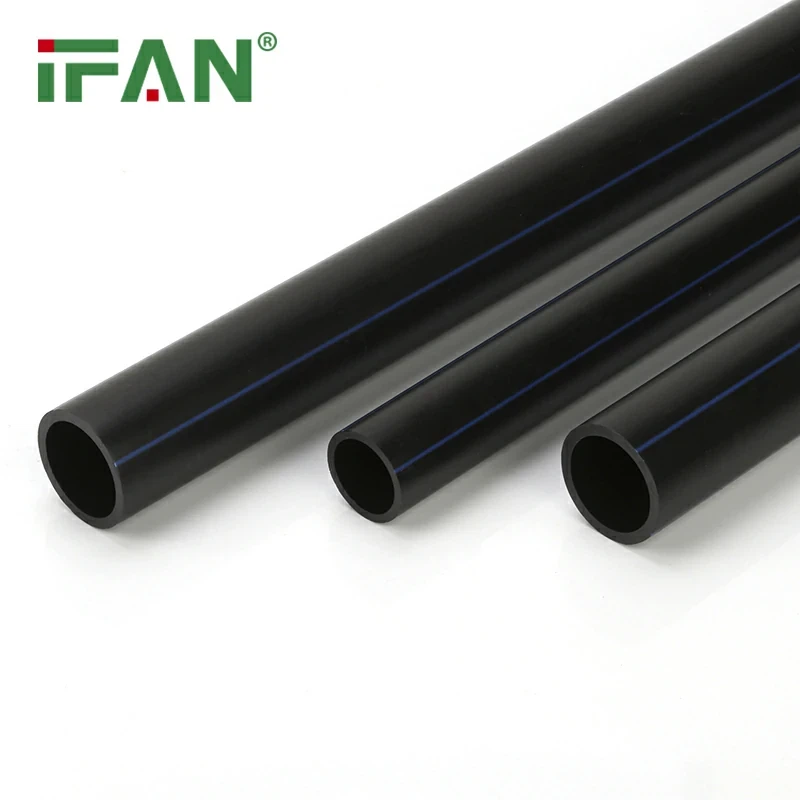

HDPE Pipe Applications in Mining Industry
Slurry Handling Systems
In mining operations, slurry transport is one of the most demanding processes. HDPE pipes are widely used to move slurry from extraction points to processing areas. The slurry contains solid particles suspended in water, including sand, gravel, and crushed ore. These materials can be extremely abrasive and cause rapid wear in pipelines. HDPE pipes are used to manage this flow efficiently. Their smooth interior helps maintain velocity and prevents buildup. Mines often install long-distance slurry pipelines across uneven terrain. HDPE can be joined in continuous lengths to reduce flow interruptions. Slurry lines often run above or below ground, depending on site needs.

| Product Name | IFAN HDPE Pipe |
| Size | 20-630mm Or Customized |
| Color |
Black Or Customized |
| Package | IFAN standard packaging |
| Features | Durable |
| Sample | Sample Free |
| Contact | Click HERE to contact us now! |
Welcome to contact IFAN, we are online 24 hours a day to answer your questions!
Tailings Conveyance and Storage
After mineral processing, leftover material is transported as tailings. HDPE pipes carry tailings from processing plants to ponds or storage areas. These pipelines operate under variable flow conditions and must handle solids of different sizes. Tailings lines often extend for several kilometers across remote sites. HDPE pipes are selected for these systems because they allow for flexibility in layout and alignment. Mines use both gravity and pumped systems to move tailings through HDPE lines. Tailings disposal systems require precision to avoid environmental impact. The pipes are used to distribute tailings evenly into ponds or dry-stack facilities for further treatment or containment.
Mine Dewatering Lines
Mines often encounter groundwater during excavation. Dewatering systems use HDPE pipes to remove excess water from pits and tunnels. These lines carry groundwater from pumps to discharge points, treatment stations, or storage tanks. Pipes are typically installed in trenches or mounted along tunnels using clamps. In open-pit mining, dewatering lines are laid on the surface and rerouted as excavation progresses. Water collected may be reused for dust suppression or processing. HDPE pipes are preferred for these systems because of their flexibility in adapting to shifting site conditions. Dewatering is continuous in some operations, requiring reliable and movable piping layouts.
Process Water Distribution
Mining processes require water at various stages, including crushing, grinding, and mineral separation. HDPE pipes distribute process water throughout the mine. Water is drawn from reservoirs, treatment plants, or natural sources. It is transported to equipment and tanks for use in ore processing. The piping layout often includes valves and flow meters for regulation and monitoring. In surface and underground mines, HDPE pipes are suspended, buried, or supported on racks. They are also used in recirculation loops to maximize water efficiency. Water temperatures may vary, and the pipes perform well across different thermal conditions. Installations are designed for long-term operation without frequent changes.
Heap Leaching Systems
In gold and copper mining, heap leaching is used to extract metals from crushed ore. HDPE pipes distribute leaching solution across the surface of the ore heap. The solution percolates downward, dissolving metals, which are collected at the bottom. Pipes are arranged in grids to ensure even spray and flow across large areas. The solution, often acidic, is transported using HDPE lines from tanks to distribution manifolds. The recovered solution is also carried back to processing plants through return pipelines. HDPE pipes are used for both the supply and collection stages in heap leaching operations. These systems often operate continuously for several months or years.
Chemical Transfer Lines
Mining processes require the use of chemical reagents such as sulfuric acid, cyanide, and flocculants. HDPE pipes transfer these chemicals between storage tanks and processing units. Piping systems are designed to safely handle reactive substances under pressure. The layout may involve above-ground or below-ground routing depending on the site design. Pipes are connected with fusion joints to eliminate leakage points. Transfer lines are fitted with control valves, pressure gauges, and monitoring ports. Some facilities operate automated systems for dosing and mixing. HDPE pipes are used in these systems for reliable transport and containment of aggressive chemical agents during daily operation.
Dust Suppression Networks
Mining operations generate large volumes of dust during excavation, loading, and transport. HDPE pipes are used to supply water to spray systems positioned across the mine. These systems include nozzles mounted on roads, conveyors, and crushers. HDPE pipelines run alongside traffic routes and processing areas. They are connected to pumps and water storage tanks. Water is sprayed continuously or intermittently, depending on air quality monitoring. HDPE pipes support long spray lines with multiple outlets. In mobile applications, the piping is connected to water trucks or trailers. Mines often relocate the pipe network as excavation areas shift over time.
Pit and Surface Drainage Systems
Rainwater and surface runoff must be managed to prevent flooding and erosion. HDPE pipes are used to construct drainage systems in mining areas. Pipes collect and direct stormwater to sumps, treatment stations, or settling ponds. Drainage lines are installed along haul roads, slopes, and pit edges. Catch basins, culverts, and manholes are connected using HDPE fittings. Piping routes are planned to follow gravity flow paths. Temporary and permanent drainage systems use HDPE to handle variable water volumes. The pipe network supports environmental compliance by preventing uncontrolled discharge. Maintenance crews inspect and clean the lines periodically using access ports and hoses.
Underground Mine Piping
In underground mining, space is limited and working conditions are difficult. HDPE pipes are installed for various services, including water supply, ventilation misting, and chemical delivery. Pipes are secured to tunnel walls and ceilings using brackets or clips. They are routed through shafts and inclined drifts to reach different levels. Compact fusion equipment is used underground to join sections safely. In narrow spaces, HDPE's flexibility allows tight bends and turns. Some mines install dual lines for fresh water and waste discharge. Pressure-regulating valves and flow meters are included for safety and monitoring. Underground piping systems must remain functional despite vibration and movement.
Mobile and Temporary Piping Systems
Mining sites frequently change as excavation advances or projects move. HDPE pipes are used for temporary water or fluid transfer systems. These pipelines support exploration drills, camp supplies, and construction zones. Pipes can be rolled out quickly and joined on-site. Mobile systems are installed on skids, trailers, or laid directly on the ground. HDPE lines can be disassembled and reused multiple times in different locations. This makes them practical for short-term operations. Contractors often store coils of HDPE on-site for emergency setups. Temporary lines are commonly used for wash stations, fuel transfer, and temporary drainage during construction.
Conclusion
HDPE pipes are widely used throughout mining operations for fluid transport, tailings movement, and chemical handling. They support key systems in both surface and underground settings. Their use in slurry, leachate, dewatering, and water supply systems enables efficient and controlled material flow. In temporary and mobile setups, HDPE allows fast and flexible deployment. In permanent networks, it offers long-term support for operational continuity. Mines rely on HDPE piping systems to maintain safe, efficient, and regulated production across a range of technical needs.




Hot Tags: hdpe pipe applications in mining industry, China hdpe pipe applications in mining industry manufacturers, suppliers, factory, HDPE Plastic Pipe
Send Inquiry
