


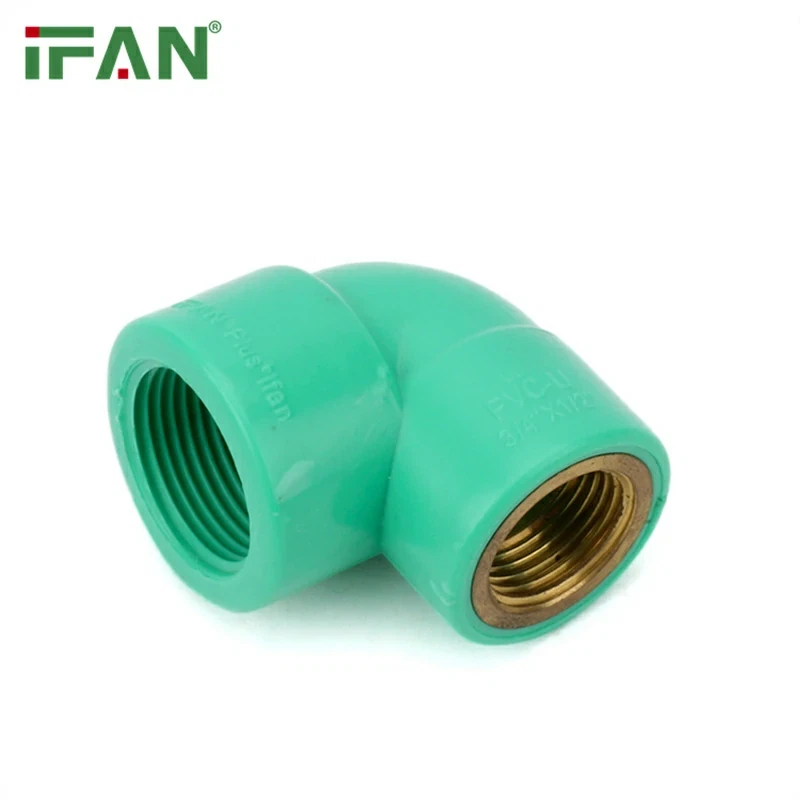

Strong Leak Protection UPVC Thread Fittings

|
Product Name |
UPVC Thread Fitting |
|
Standard |
BST |
|
Color |
White/Green or Customized |
|
Size |
1/2''-4'' |
|
Brand |
IFAN or Customized |
|
OEM |
Support |
|
Sample |
|
|
Experience |
30+Years |
|
Contact Us |
Welcome to contact IFAN, we are online 24 hours a day to answer your questions!
Precision Thread Design
UPVC thread fittings use precision-engineered threads that ensure tight, accurate connections. The threads are manufactured with consistent depth and pitch, allowing seamless engagement between male and female parts. This accuracy reduces the chance of misalignment, which often leads to leaks. Unlike fittings with loosely cut threads, UPVC threads grip securely and maintain their integrity under pressure. Proper engagement of threads results in minimal voids between the parts. These tight contact surfaces help block fluid passage where it shouldn't occur. Even with repeated tightening or disassembly, the threading maintains its shape. This durability supports long-term leak resistance, making the connection reliable over extended use. The precise threading also reduces the need for excessive torque. Over-tightening can damage fittings and increase leak risks, but UPVC threads are effective without extreme force. Each component is designed to form a tight seal with minimal effort. The uniform thread profile and surface finish allow for smooth assembly. This minimizes gaps that water or gas might escape through. Ultimately, precision threading plays a central role in ensuring leak protection. It allows the fitting to perform consistently and securely across a variety of conditions and installations.
Reliable Sealing Techniques
Thread sealing materials are crucial in leak prevention. When paired with UPVC thread fittings, they form a comprehensive seal. Common sealing options include PTFE tape and liquid thread sealants. These materials fill microgaps between threads and act as a barrier to fluid movement. PTFE tape, when wrapped correctly, enhances the joint's tightness. It also reduces friction during assembly and protects threads from wear. Liquid sealants cure after application and form a hardened seal between threads. This ensures even better resistance to vibration or movement. The sealants also help prevent loosening due to thermal expansion or mechanical stress. Proper sealing not only protects against leakage but extends the lifespan of the connection. Sealing techniques must be applied carefully. Too much sealant can affect threading, and too little leaves gaps. UPVC threads work well with moderate sealing application. The even thread surface holds sealing materials effectively. In combination with the fitting's design, sealing materials enhance its leak-resistant properties. They form a second line of defense against water ingress. Together, precise threading and reliable sealing materials provide double-layered protection. This makes the entire system highly resistant to fluid leaks.
Resistance to Pressure Variations
UPVC thread fittings maintain integrity under various pressure levels. Sudden spikes in pressure can weaken low-quality fittings. However, UPVC materials are resistant to deformation and bursting. Their structural strength ensures that the threads stay engaged even under stress. High internal pressure can push against the thread seal and cause separation. In UPVC fittings, the threaded joint design helps distribute stress evenly. This prevents localized failure and maintains a secure connection. Over time, pressure fluctuations can lead to fatigue in weaker materials. Cracks and micro-leaks may form in fittings not designed for such stress. UPVC thread fittings are built to withstand these cycles. Their strong thread engagement and material stability limit this risk. Even in high-pressure environments, the fittings retain a tight seal. This leak resistance remains consistent over time, reducing the need for frequent maintenance. The thread profile also plays a role in handling pressure. Deeper threads provide more surface area for stress distribution. The more uniform the thread engagement, the less chance of leaks occurring. This stability under pressure contributes significantly to overall leak protection.
Vibration and Movement Tolerance
In many systems, vibration is a constant issue. Pumps, flow variations, or environmental factors can cause regular motion. These movements often loosen threaded connections over time. However, UPVC thread fittings are designed to resist such loosening. The threads are made to grip tightly and hold their position even under minor shifts. This reduces the likelihood of leaks due to loosening joints. The fittings maintain constant pressure at the seal points. Unlike metal threads that may wear down or deform under vibration, UPVC threads are more resilient. Their elasticity allows for slight flexing without losing grip. This gives them an advantage in dynamic environments. The use of sealing materials adds another layer of protection. Sealants remain effective even during minor movement, reinforcing the seal. This combination of thread stability and sealing security limits leak potential. Movement-related failures are less likely with UPVC systems. As a result, they are suitable for installations where consistent vibration cannot be avoided. Thread design, material choice, and sealing strategy work together. They maintain a leak-proof connection in unstable or moving systems.
Temperature Stability and Leak Prevention
Thermal expansion and contraction cause many fitting failures. Materials that expand or shrink excessively lose sealing capability. UPVC thread fittings demonstrate excellent dimensional stability under temperature changes. They retain their shape and thread engagement even with heat or cold exposure. When temperatures rise, some materials soften and deform. UPVC maintains its hardness and structural alignment, keeping the threads tight. On cooling, many materials contract and create gaps in connections. UPVC fittings contract minimally, preserving seal integrity. This makes them reliable in environments with fluctuating temperatures. The fittings can endure both hot and cold cycles without significant loss in seal quality. This consistency prevents leakage due to temperature-related stress. Sealing materials used with UPVC threads also resist thermal breakdown. PTFE tape and certain thread sealants remain stable across a wide temperature range. Together, these properties ensure a lasting, reliable seal regardless of environmental conditions. The fittings also resist condensation and associated swelling or shrinkage. This further improves their long-term sealing performance. Temperature stability is a crucial factor in leak prevention. With UPVC, both the material and the threading system contribute to this protection.
Thread Geometry and Fit
The geometry of threads plays a direct role in sealing performance. UPVC thread fittings are designed with carefully calculated thread angles and depth. This geometry ensures tight engagement between the male and female parts. Threads that do not fit properly allow water or gas to escape. With UPVC, the thread contact is uniform and strong. The fittings often use tapered threads, which tighten as they are screwed together. Tapering improves grip and eliminates gaps as pressure increases. This results in a tighter seal the more the fitting is engaged. Straight threads, when used, are paired with gaskets or sealants to ensure leak protection. The smooth surface finish on UPVC threads also helps. It minimizes rough areas where leaks might start. A clean thread surface improves sealant adhesion and fit accuracy. Every detail in the thread geometry helps minimize risk. Whether through tapering, angle precision, or thread depth, UPVC fittings achieve consistent sealing performance. This exact fit ensures repeatable, dependable leak protection in every connection.
Long-Term Durability
Leak protection isn't only about the initial seal. Over time, materials degrade, threads wear, and seals fail. UPVC thread fittings offer exceptional durability against environmental and mechanical wear. The material is corrosion-resistant and does not rust or decay. This helps maintain thread integrity over time. Where metal fittings might seize or erode, UPVC remains unaffected. The threads continue to engage cleanly after years of use. Additionally, UPVC does not support biofilm or scale buildup. This keeps the threads clean and clear for a tight seal. Thread wear is a common source of leakage in older systems. With UPVC, thread deformation is minimal under normal use. The combination of durability and stability leads to fewer maintenance requirements. It also reduces the likelihood of unexpected leaks. The fittings are designed for repeated assembly without losing seal quality. Even after multiple cycles, the threads still fit snugly. This long-term performance is crucial in systems where safety and leak prevention are priorities. UPVC thread fittings provide lasting, consistent leak protection well beyond their installation.


Hot Tags: strong leak protection upvc thread fittings, China strong leak protection upvc thread fittings manufacturers, suppliers, factory
Send Inquiry
