
1. Connecting Piping Systems to Metal Equipment
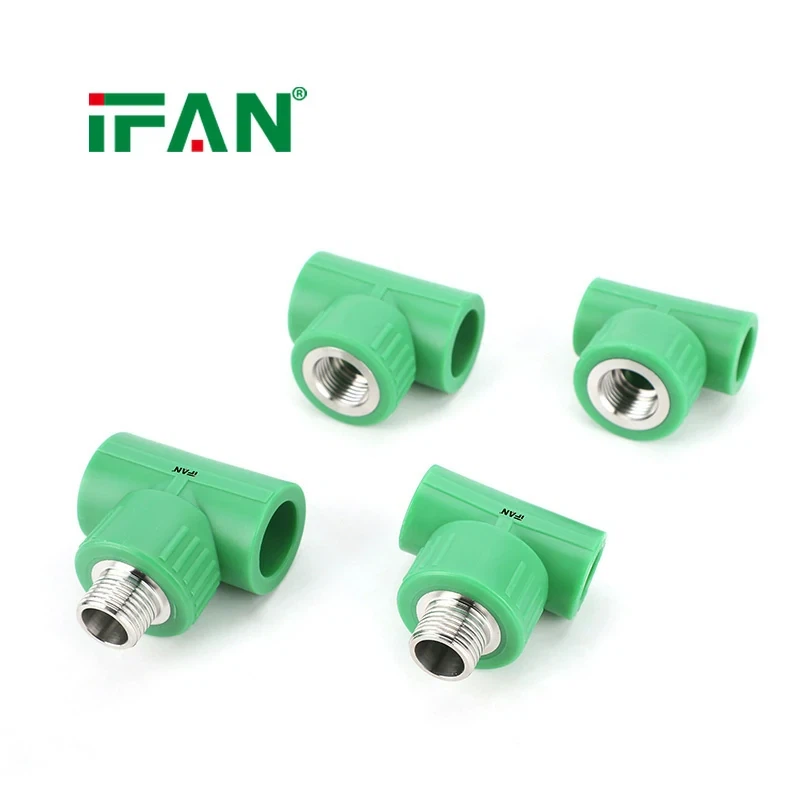
The most fundamental application of stainless steel PPR fittings is serving as a reliable bridge between PPR plastic pipes and metal components . In any modern plumbing or heating system, you will inevitably need to connect your plastic distribution piping to devices like pumps, boilers, water heaters, and valves. Stainless steel PPR fittings are specifically engineered for this purpose, combining a PPR socket for heat fusion welding with a robust stainless steel threaded insert .
The stainless steel thread provides a standardized, strong mechanical connection to metal equipment. In contrast, the PPR end fuses directly to your plastic piping system, creating a permanent, leak-proof joint at the interface where leaks are most likely to occur .
Unlike brass pipe fittings, which can suffer from dezincification in aggressive water conditions, stainless steel provides superior long-term corrosion resistance, making it the preferred choice for demanding applications where traditional brass pipe fittings might fail prematurely.
2. Heating Systems and Radiator Connections
Stainless steel PPR fittings are widely used in residential and commercial hydronic (hot water) heating systems. A primary application is connecting PPR piping to radiator valves, including thermostatic radiator valves (TRVs) and lockshield valves .
The compact design of these fittings is a major advantage. Space behind a radiator is always tight. Using a stainless steel PPR fitting eliminates the need for multiple adapters and extra elbows, saving crucial inches and making installation much easier . The fitting's integrated construction fuses the metal thread into the PPR body during manufacturing, creating a single, rigid unit that resists vibration from circulation pumps.
This integrated construction also ensures the metal thread cannot spin or loosen inside the plastic body when you apply torque with a wrench, preventing a common cause of leaks in heating systems.
3. Connection to Pumps and Vibration-Prone Equipment
Piping systems often connect to circulation pumps, especially in larger heating or cooling systems . Pumps generate constant vibration. A standard threaded plastic connection can slowly loosen over time. Stainless steel PPR fittings are the ideal solution here.
Because the stainless steel thread is permanently and molecularly fused into the PPR body during manufacturing, the metal insert cannot twist or back out from the plastic due to vibration . This creates a highly secure connection that stands up to years of mechanical stress.
The PPR body itself also has a slight natural flexibility that helps absorb and dampen high-frequency vibrations. This reduces stress on the entire connection point, making stainless steel PPR fittings more reliable than both all-metal connections and loose mechanical adapters for connecting to vibrating equipment.
4. Potable (Drinking) Water Supply Systems
Stainless steel is one of the safest materials available for drinking water systems. It is non-toxic, highly corrosion-resistant, and naturally hygienic. Stainless steel PPR fittings are certified to NSF/ANSI 61 standards for potable water contact .
The PPR body of the fitting is also certified non-toxic and FDA-approved, ensuring no harmful substances leach into the water supply. The smooth internal surface of the fitting reduces friction and prevents bacterial buildup, making it ideal for pure water applications in residential homes, hospitals, hotels, schools, and office buildings .
Unlike brass pipe fittings, which may contain lead in some alloys or use dezincification-prone materials, stainless steel provides complete peace of mind for drinking water safety.
5. High-Temperature Industrial Systems
Many industrial processes involve transporting hot fluids or chemicals at high temperatures. Standard PPR is rated for 70°C continuous operation, but specific stainless steel PPR fittings are designed for more extreme conditions .
These stainless steel PPR fittings can withstand continuous temperatures up to 95°C (203°F) and pressure ratings of PN25 (25 bar / 363 psi) or higher, depending on the specific model .
The Pro Model versions, which feature 316 stainless steel threads and enhanced PPR material, can operate in temperatures ranging from -30°C to 110°C, making them suitable for demanding chemical plants, industrial water treatment, and even solar thermal systems where stagnation temperatures can run extremely high .
6. Corrosive and Chemical Environments
Brass pipe fittings are vulnerable to dezincification and other forms of corrosion in aggressive water conditions, such as high chloride or high acid environments. Stainless steel PPR fittings (especially those with 316-grade stainless steel) contain no zinc and are completely immune to this form of corrosion .
Manufacturers claim the Pro Model's 316 stainless steel threads outperform industry benchmarks, enabling safe use in aggressive chemical environments. This triple corrosion resistance makes them the superior choice for coastal installations, industrial chemical processing, and applications involving treated or recycled water where traditional brass pipe fittings would fail.
The PPR body further protects against corrosion, as polypropylene is highly resistant to most acids, bases, and salts.
7. Hot and Cold Water Distribution in Buildings
The combination of PPR and stainless steel creates a fitting suitable for both hot and cold water applications within a single distribution system. A single stainless steel PPR fitting can be used for a hot water supply line to a kitchen faucet or a cold water line to a toilet, simplifying inventory for installers .
The fitting's PPR body handles thermal expansion and contraction without cracking, while the stainless steel thread maintains its grip. This versatility makes them a standard choice for whole-building plumbing systems, from the main water entry point to individual fixtures, as well as in complex recirculation systems where the piping network serves both hot and return lines.
8. Solar Water Heating and Renewable Energy Systems
Solar thermal systems circulate heated fluid (water or glycol) from rooftop collectors to storage tanks. These systems experience very high stagnation temperatures when the pump stops on a sunny day. Temperatures can exceed 100°C (212°F), which would damage standard plastic or brass fittings .
Stainless steel PPR fittings with a high-temperature rating (such as the Advanced or Pro Models rated up to 95-110°C) are uniquely suited for this application. The stainless steel thread resists corrosion from heat-transfer fluids, while the PPR body provides thermal insulation and withstands the extreme heat. This application leverages the best properties of both materials: stainless steel's strength at high temperatures and PPR's resistance to chemical degradation and corrosion.
9. Fire Protection and Sprinkler Systems
In light-hazard fire protection systems (such as residential sprinklers or certain commercial applications), stainless steel PPR fittings are used to connect PPR piping to sprinkler heads and control valves .
PPR has a high ignition temperature and does not sustain flame propagation. When combined with stainless steel threads, the fitting provides the necessary mechanical strength and pressure rating (PN25) required for fire codes. The hybrid construction ensures a leak-proof connection under pressure, and the material's corrosion resistance ensures the system remains operational for decades-critical for life-safety equipment.
10. Underfloor Heating (Radiant Floor) Systems
Underfloor heating systems embed PEX or PPR pipes in concrete screed. Stainless steel PPR fittings are used to connect these floor loops to distribution manifolds .
The connection point is often embedded or located in a tight manifold cabinet. The compact design of stainless steel PPR fittings saves space, while the fused PPR joint ensures zero risk of leakage inside the concrete slab, where a leak would be catastrophic and expensive to repair. The stainless steel thread provides a secure connection to the brass or stainless steel manifold, resisting the constant thermal expansion and contraction cycles of a heating system without loosening or corroding.
Summary Table of Applications
| Application Area | Primary Benefit of Stainless Steel Fittings | Typical Industry |
|---|---|---|
| Metal Equipment Connection | Reliable bridge between plastic pipes and metal pumps/valves | General plumbing, HVAC |
| Heating Systems & Radiators | Compact design for tight spaces; vibration-resistant | Residential, commercial heating |
| Pump Connections | Fused construction prevents vibration loosening | Hydronic systems, industrial |
| Drinking Water Systems | NSF 61 certified; non-toxic; hygienic | Residential, hospitals, food service |
| High-Temperature Industrial | Handles up to 95°C-110°C; PN25 pressure rating | Chemical plants, factories |
| Corrosive Environments | Immune to dezincification; 316 stainless steel option | Coastal, chemical, wastewater |
| Building Water Distribution | Suitable for both hot and cold lines | Commercial, residential |
| Solar Thermal Systems | Withstands stagnation temperatures up to 120°C | Renewable energy |
| Fire Protection | High ignition temperature; pressure-rated for codes | Residential, light commercial |
| Underfloor Heating | Zero-leak fusion joint inside concrete slabs | Residential, commercial |
The main applications of stainless steel PPR fittings center on their unique ability to transition between PPR plastic pipes and metal components. They excel in heating systems, pump connections, and demanding industrial environments where corrosion resistance is critical. For standard residential plumbing, they provide a safe, certified solution for drinking water distribution. In every application, the key advantages over brass pipe fittings are superior corrosion resistance, higher temperature tolerance, and a fused construction that resists vibration and loosening.
Do you need specific model recommendations (Base, Advanced, or Pro) for your particular application environment or water chemistry?