
Yes, They Are Highly Resistant to Rust and Corrosion in Humid Environments
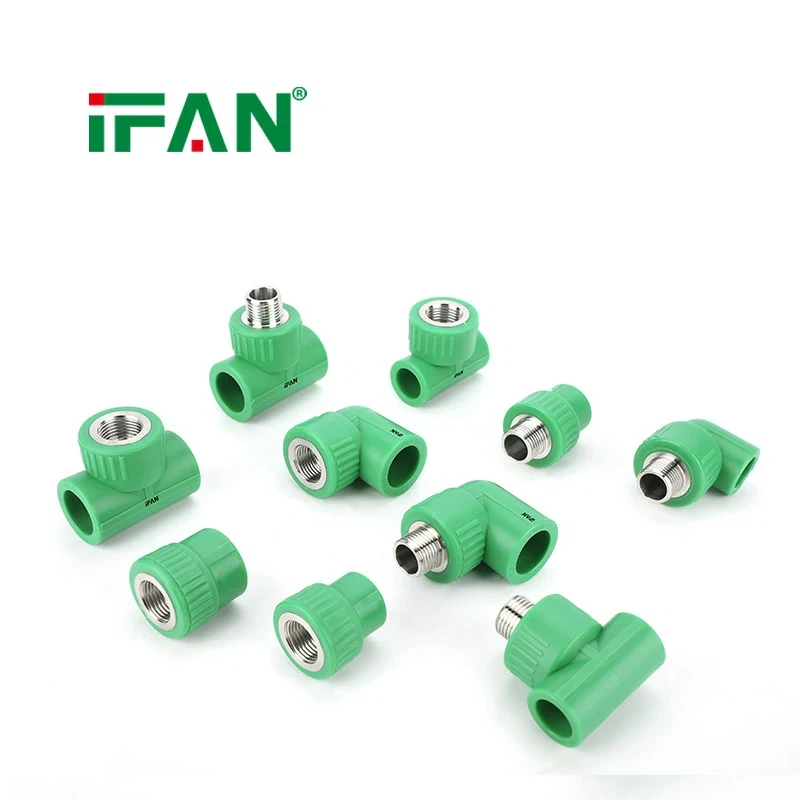
Stainless steel PPR fittings are specifically designed to resist rust and corrosion, making them an excellent choice for humid environments, including bathrooms, basements, coastal areas, and industrial settings with high moisture levels. Their resistance comes from the combination of two inherently corrosion-resistant materials.
How Stainless Steel Resists Rust
The stainless steel component in stainless steel PPR fittings contains chromium, typically at least 10.5% of the alloy . When exposed to oxygen, chromium forms an invisible, ultra-thin chromium oxide layer on the metal's surface .
The Self-Healing Property:
If the surface is scratched or damaged, the protective oxide layer instantly reforms in the presence of oxygen . This self-healing mechanism ensures that stainless steel PPR fittings maintain their corrosion resistance even after installation, handling, or accidental impacts-unlike coated metals that lose protection when scratched.
How PPR Plastic Provides Complete Protection
The PPR (polypropylene random copolymer) body of stainless steel PPR fittings contains no metal whatsoever . This means the plastic portion is:
Completely immune to rust – cannot form iron oxide
Immune to galvanic corrosion – no electrochemical reaction with dissimilar metals
Highly resistant to chemicals – unaffected by chlorine, acids, and bases found in water systems
PPR does not degrade when exposed to moisture, humidity, or condensation . This makes the entire fitting, both the plastic body and the metal threads, suitable for long-term use in consistently wet environments.
Performance in Humid Environments: Key Factors
Moisture and Humidity
Water is the primary electrolyte needed for corrosion to occur. In humid environments, moisture is constantly present. Stainless steel PPR fittings handle this exceptionally well because:
| Environmental Factor | How Stainless Steel PPR Fittings Respond |
|---|---|
| Condensation on pipes | No effect on stainless steel threads or PPR body |
| High humidity bathrooms | PPR body unaffected; stainless threads maintain oxide layer |
| Wet basements | Complete resistance to moisture-related degradation |
| Coastal fog/salt spray | 316-grade recommended for superior chloride resistance |
Chemical Exposure in Humid Conditions
Humidity often carries chemicals that accelerate corrosion. The Pro Model of stainless steel PPR fittings with 316 stainless steel is specifically designed to "safely handle corrosive fluids" and aggressive chemical environments .
The table below shows how different grades perform against common corrosive elements found in humid environments:
| Corrosive Agent | 304 Stainless Steel | 316 Stainless Steel | PPR Body |
|---|---|---|---|
| Freshwater humidity | Excellent | Excellent | Excellent |
| Chlorinated water (pools) | Moderate | Excellent | Excellent |
| Salt spray (coastal) | Vulnerable to pitting | Excellent | Excellent |
| Chlorides from cleaning | Moderate with rinsing | Excellent | Excellent |
Comparison with Brass in Humid Environments
Traditional brass pipe fittings have been used for decades and offer good corrosion resistance. However, they have a specific vulnerability: dezincification. This is a process where zinc leaches out of the brass alloy in aggressive water conditions, leaving behind a weak, porous copper structure .
| Feature | Stainless Steel PPR Fittings | Brass Pipe Fittings |
|---|---|---|
| Corrosion mechanism | Passive chromium oxide layer (self-healing) | Natural copper alloy resistance |
| Dezincification risk | None (contains no zinc) | Yes – zinc leaches in aggressive conditions |
| Chloride resistance (304) | Moderate | Limited |
| Chloride resistance (316) | Excellent | Limited |
| Best for | All humid environments, especially aggressive | Standard humidity, no salt exposure |
In chloride-rich environments like coastal areas or swimming pool facilities, 316 stainless steel PPR fittings are clearly superior. Brass, while performing well in standard humidity, can fail over time when exposed to salt spray or aggressive chemicals .
Key Advantages in Specific Humid Environments
Coastal and Marine Environments
For homes or facilities within 2 km of the ocean, salt spray is a constant challenge. Stainless steel PPR fittings with 316-grade stainless steel are specifically recommended for "coastal areas, chemical plants, and extreme climates" due to their triple corrosion resistance . The molybdenum in 316 stainless steel provides exceptional protection against chloride-induced pitting corrosion.
Swimming Pools and Spas
Pool areas combine high humidity with chlorinated water and air. Stainless steel PPR fittings handle this environment well, while brass fittings may experience accelerated dezincification. The PPR body is also resistant to chlorine damage .
Industrial Environments
Factories and chemical plants often have high humidity combined with chemical vapors. The Pro Model stainless steel PPR fittings are designed for "aggressive chemical environments" and "safely handle corrosive fluids" .
Residential Bathrooms and Basements
For standard residential humid environments, the Base Model stainless steel PPR fittings with 304 stainless steel are more than sufficient. They provide complete rust protection and long-term reliability at a lower cost point than 316.
Model Selection Guide for Humid Environments
Stainless steel PPR fittings are available in different grades to match the severity of the environment :
| Model | Material Grade | Best For |
|---|---|---|
| Base Model | 304 Stainless Steel | Standard indoor humidity, bathrooms, basements |
| Advanced Model | 304 with Enhanced Protection | High humidity, commercial settings |
| Pro Model | 316 Stainless Steel | Coastal areas, salt spray, chemical exposure, pools |
The Pro Model features "triple corrosion resistance" and is recommended for "aggressive chemical environments" where standard stainless steel might be insufficient .
Testing and Certification Evidence
Reputable stainless steel PPR fittings are manufactured under ISO 9001 quality management systems and carry CE certification . These certifications require demonstrated corrosion resistance and material quality.
Manufacturers claim that "with corrosion-resistant plastic and stainless steel components, you can ensure 50% longer lifespan than traditional metal fittings in corrosive environments" . This is supported by the self-healing properties of stainless steel's passive oxide layer.
Summary
Stainless steel PPR fittings are highly resistant to rust and corrosion in humid environments due to:
Stainless steel threads forming a self-healing chromium oxide layer
PPR plastic body being completely immune to rust and galvanic corrosion
316-grade option providing exceptional protection against chlorides and salt
For most residential humid environments, the Base Model (304 stainless steel) is sufficient. For coastal areas, swimming pools, or industrial applications, the Pro Model (316 stainless steel) is recommended for maximum corrosion resistance. Unlike brass pipe fittings, stainless steel PPR fittings contain no zinc and are immune to dezincification, making them more reliable in aggressive or chemically treated water conditions.