


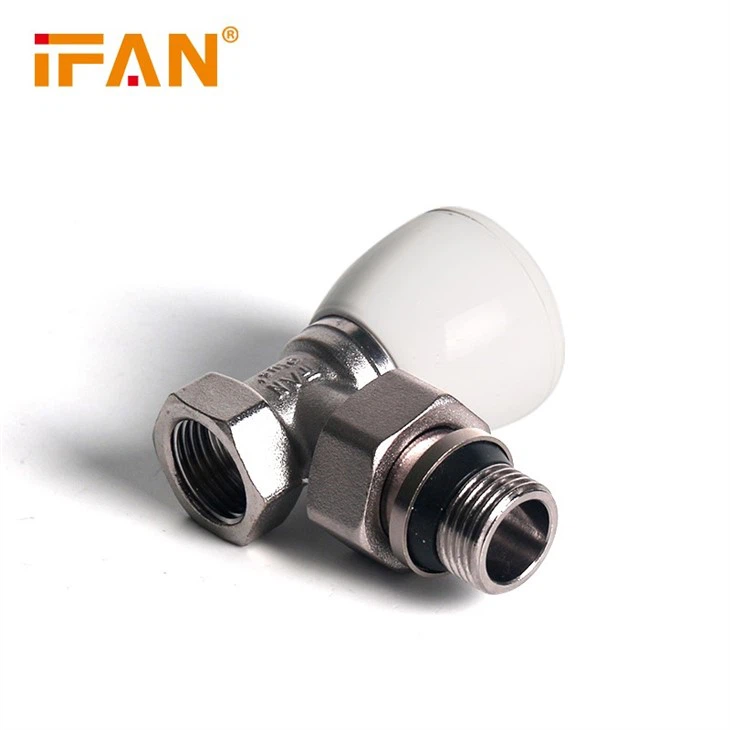


Factory Supplier Brass Radiator Valves
Brand: IFAN
Connecting method:Thread
Applications:Potable Water Systems
Color:Silver
Send Inquiry
Product Details ofFactory Supplier Brass Radiator Valves
Introduction to Anti-Leak Brass Ball Valves
Anti-leak brass ball valves are a crucial component in plumbing and industrial systems, designed to prevent leaks and ensure a secure flow of liquids and gases. These valves are engineered to provide long-lasting performance, combining the durability of brass with innovative anti-leak features. In this article, we will explore the key characteristics that make anti-leak brass ball valves an essential choice for various applications.

| Product Name | Raditor Valve |
| Color | Sliver Color |
| Size | 1/2" 3/4" |
| Brand | IFAN or Customized |
| OEM |
Support |
| Sample | Free |
| Experience | 30+Years |
| Contact Us | Click HERE to contact us now! |
Welcome to contact IFAN, we are online 24 hours a day to answer your questions!
Corrosion Resistance of Copper Temperature Control Valves
1. Introduction to Corrosion in Valves
Corrosion is a significant concern in the design and maintenance of valves used in various industrial applications, including HVAC systems, chemical processing, and water treatment. It occurs when materials degrade due to environmental factors such as moisture, temperature fluctuations, and exposure to corrosive substances. For valves, corrosion can lead to leaks, reduced efficiency, and costly repairs or replacements. Copper temperature control valves are often selected for their remarkable resistance to corrosion, which enhances their reliability and longevity. Understanding the factors contributing to copper's corrosion resistance is essential for evaluating its suitability in diverse applications.
2. Natural Corrosion Resistance of Copper
Copper possesses inherent corrosion-resistant properties due to its unique chemical composition. When exposed to air and moisture, copper forms a protective oxide layer known as cuprous oxide. This layer acts as a barrier that prevents further oxidation and corrosion, allowing copper valves to maintain their structural integrity over time. Unlike materials such as iron, which can rust and deteriorate rapidly, copper's protective layer minimizes the risk of damage in humid environments. This property makes copper valves particularly advantageous in applications where exposure to moisture is inevitable, such as in HVAC systems and plumbing. Thus, the natural corrosion resistance of copper contributes significantly to the longevity of temperature control valves.
3. Comparison with Other Materials
When comparing copper temperature control valves with those made from other materials, such as stainless steel and plastic, the advantages of copper become evident. While stainless steel is known for its corrosion resistance, it can be susceptible to pitting corrosion, especially in chloride-rich environments. Plastic valves, while resistant to certain chemicals, can become brittle over time and degrade under high temperatures. In contrast, copper maintains its performance across a broader range of conditions, providing reliable operation even in harsh environments. This robustness is especially important in industries like chemical processing, where the valves may come into contact with aggressive fluids. Consequently, the corrosion resistance of copper positions it as a superior choice for many demanding applications.
4. Environmental Factors Influencing Corrosion
The corrosion resistance of copper temperature control valves can be influenced by various environmental factors. High humidity, exposure to chlorides, and acidic or alkaline conditions can accelerate corrosion processes. However, copper's inherent properties allow it to withstand moderate exposure to these factors better than many alternative materials. For instance, in marine environments where saltwater is prevalent, copper valves may exhibit some corrosion but are generally more durable than iron or certain alloys. Proper selection of copper alloys, such as bronze or brass, can further enhance resistance to specific corrosive agents. By understanding the environmental conditions in which copper valves operate, engineers can make informed decisions about their application and expected lifespan.
5. Maintenance and Best Practices
While copper temperature control valves offer excellent corrosion resistance, regular maintenance is crucial to prolonging their lifespan and ensuring optimal performance. Routine inspections can identify early signs of wear or corrosion, allowing for timely interventions. Additionally, ensuring proper installation and avoiding contact with incompatible materials can minimize corrosion risks. In applications where aggressive chemicals are present, it may be beneficial to apply protective coatings to the copper surface. By adhering to best practices for maintenance and care, users can maximize the benefits of copper valves, leveraging their corrosion resistance for reliable and efficient operation in various industrial settings. Overall, the corrosion-resistant properties of copper, combined with proactive maintenance, make these valves a durable choice for numerous applications.


Hot Tags: factory supplier brass radiator valves, China factory supplier brass radiator valves manufacturers, suppliers, factory, PPH Female Tee, PPR Pipe End Cap, Male Elbow Compression Fitting, CPVC Flange, HDPE Male Socket, CPVC 45 Elbow
Send Inquiry
