
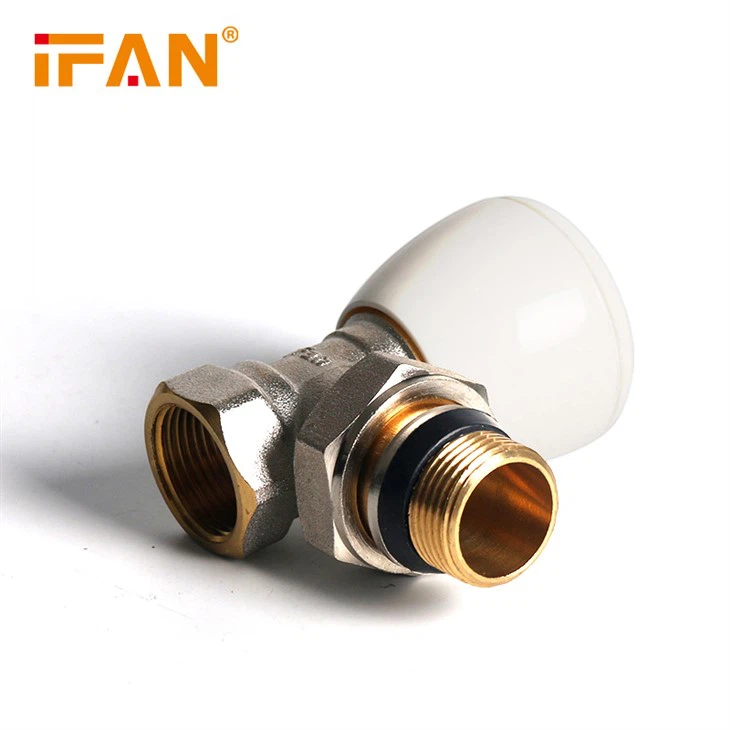


Environment-Friendly Brass Radiator Valves
Brand: IFAN
Connecting method:Thread
Applications:Potable Water Systems
Color:Silver
Send Inquiry
Product Details ofEnvironment-Friendly Brass Radiator Valves
Introduction to Anti-Leak Brass Ball Valves
Anti-leak brass ball valves are a crucial component in plumbing and industrial systems, designed to prevent leaks and ensure a secure flow of liquids and gases. These valves are engineered to provide long-lasting performance, combining the durability of brass with innovative anti-leak features. In this article, we will explore the key characteristics that make anti-leak brass ball valves an essential choice for various applications.

| Product Name | Raditor Valve |
| Color | Sliver Color |
| Size | 1/2" 3/4" |
| Brand | IFAN or Customized |
| OEM |
Support |
| Sample | Free |
| Experience | 30+Years |
| Contact Us | Click HERE to contact us now! |
Welcome to contact IFAN, we are online 24 hours a day to answer your questions!
How to Effectively Manage the Supply Chain of Temperature Control Valves
1. Understanding Supply Chain Dynamics
Effective supply chain management (SCM) is crucial for the success of temperature control valve manufacturers. The supply chain encompasses various stages, including sourcing raw materials, production, distribution, and customer delivery. Understanding these dynamics allows companies to optimize processes and enhance efficiency. A well-managed supply chain reduces costs, shortens lead times, and improves overall product quality. Additionally, companies must stay informed about market trends, demand fluctuations, and supplier capabilities to anticipate changes that could impact operations. By developing a comprehensive understanding of supply chain dynamics, organizations can implement strategic measures that ensure smooth operations and enhance competitiveness in the temperature control valve market.
2. Strategic Sourcing and Supplier Relationships
One of the key aspects of effective supply chain management is strategic sourcing, which involves selecting and managing suppliers who provide the necessary materials and components for temperature control valves. Building strong relationships with suppliers can lead to improved collaboration, better pricing, and more reliable delivery schedules. Companies should conduct thorough evaluations of potential suppliers, considering factors such as quality, reliability, and financial stability. Establishing long-term partnerships with key suppliers can create a more resilient supply chain, enabling quicker responses to market demands and reducing risks associated with disruptions. Regular communication and collaboration with suppliers also foster innovation, allowing for the continuous improvement of materials and processes used in valve production.
3. Implementing Technology and Automation
Leveraging technology and automation is essential for enhancing supply chain efficiency in the temperature control valve industry. Companies can utilize advanced software solutions for inventory management, demand forecasting, and production scheduling. For instance, implementing Enterprise Resource Planning (ERP) systems can provide real-time visibility into inventory levels, helping to prevent stockouts or overstock situations. Additionally, automation in manufacturing processes can streamline production, reduce labor costs, and improve product consistency. Technologies such as IoT (Internet of Things) and data analytics can facilitate predictive maintenance, enabling companies to anticipate equipment failures before they occur. By adopting these technological advancements, businesses can optimize their supply chains, resulting in improved operational performance and customer satisfaction.
4. Demand Forecasting and Inventory Management
Accurate demand forecasting is critical for effective inventory management in the temperature control valve supply chain. Companies must analyze historical sales data, market trends, and customer feedback to develop reliable forecasts. This information allows businesses to adjust production schedules and inventory levels accordingly, reducing excess inventory and minimizing carrying costs. Implementing just-in-time (JIT) inventory strategies can further enhance efficiency by ensuring that materials and components arrive precisely when needed in the production process. Additionally, utilizing inventory management software can help track stock levels in real time, facilitating better decision-making. By effectively managing demand forecasting and inventory, companies can maintain optimal stock levels and ensure timely delivery to customers, ultimately improving competitiveness.
5. Continuous Improvement and Risk Management
Continuous improvement is a fundamental principle of effective supply chain management. Companies should regularly evaluate their supply chain processes to identify inefficiencies and areas for enhancement. Implementing methodologies such as Lean and Six Sigma can help streamline operations and reduce waste. Additionally, risk management strategies are crucial for mitigating potential disruptions in the supply chain. Businesses should conduct risk assessments to identify vulnerabilities, such as dependency on single suppliers or geopolitical risks. Developing contingency plans and diversifying supplier bases can reduce exposure to risks and ensure continuity in operations. By fostering a culture of continuous improvement and proactive risk management, temperature control valve manufacturers can create a resilient supply chain that supports long-term success and competitiveness in the market.


Hot Tags: environment-friendly brass radiator valves, China environment-friendly brass radiator valves manufacturers, suppliers, factory
Send Inquiry
