


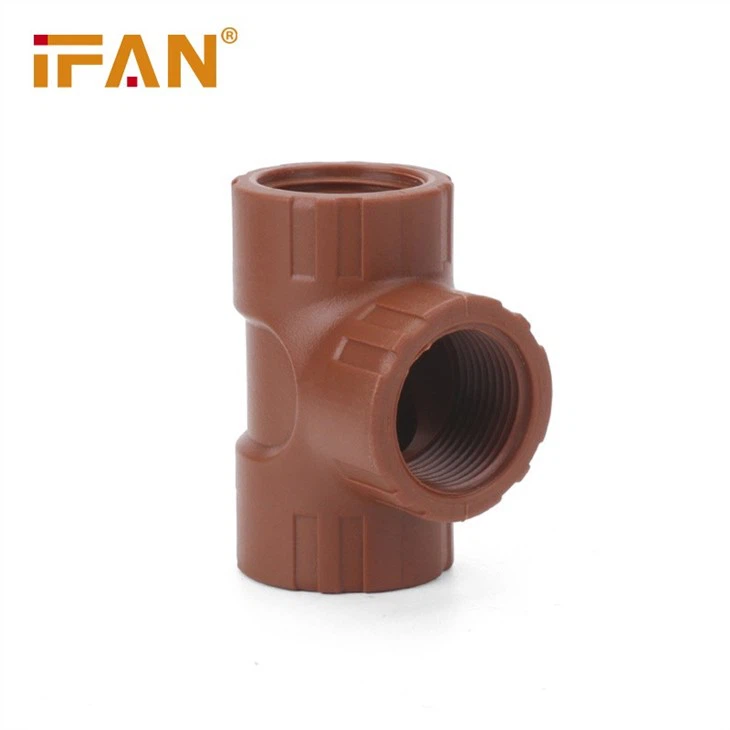
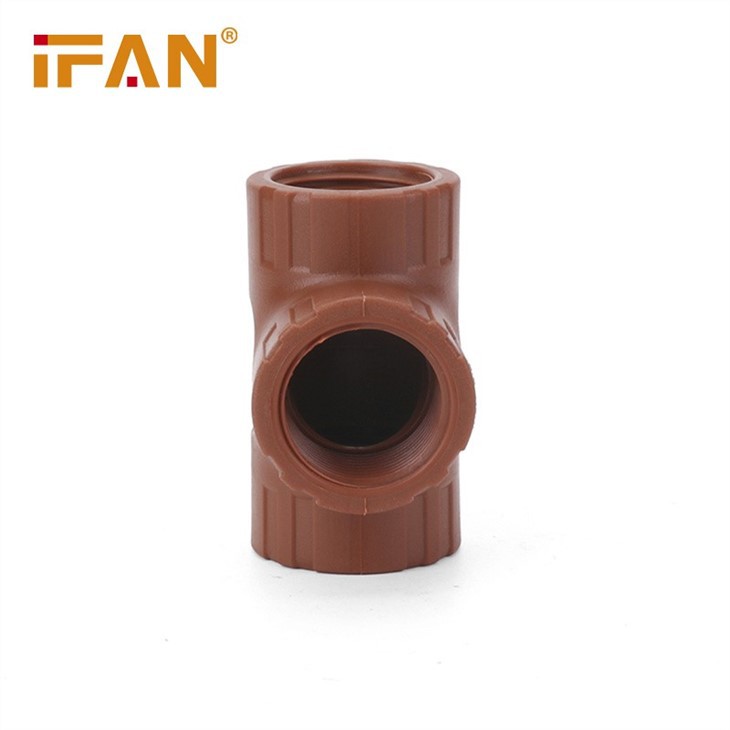
OEM ODM PPH Plumbing Fittings
Brand: IFAN
Connecting method: Thread
Applications: Cold & Hot Water
Color: Red
Send Inquiry
Product Details ofOEM ODM PPH Plumbing Fittings
Introduct:
PPH (Polypropylene Homopolymer) fittings are durable plastic components used in various piping systems, particularly for transporting water, chemicals, and gases. Known for their lightweight nature and resistance to corrosion, PPH fittings are ideal for applications in industries like chemical processing, agriculture, and construction. They can withstand high temperatures and pressures, making them suitable for both hot and cold fluid transfer. PPH fittings are also easy to install and connect with various piping systems, providing a reliable and cost-effective solution for fluid management in diverse environments. Their long lifespan contributes to reduced maintenance costs.

| Product Name | PPH Pipe Fitting |
| Standard | EN ISO 15494,DIN 8077/8078,ASTM F2389,GB/T 19472 |
| Color | Red Brown or Customized |
| Size | 1/2-2" |
| Connection | Male/Female Thread |
| Sample | Free |
| Experience | 30+Years |
| Contact Us | Click HERE to contact us now! |

Melt Flow Rate Testing of PPH Fittings
Melt flow rate (MFR) testing is a critical evaluation method for understanding the processability of PPH (Polypropylene Homopolymer) fittings. MFR measures how easily the polymer flows when melted, providing essential information about its viscosity under specific temperature and load conditions. This article explores the importance of melt flow rate testing for PPH fittings, the testing procedure, factors influencing MFR, and its implications for manufacturing and application performance.
Importance of Melt Flow Rate in PPH Fittings
Melt flow rate is a vital indicator of a polymer's flow characteristics during processing. For PPH fittings, MFR directly influences manufacturing techniques such as injection molding and extrusion. A higher MFR indicates lower viscosity, which generally leads to easier processing and quicker production cycles. Conversely, a lower MFR suggests a thicker material that may require more energy to process. Understanding the MFR of PPH helps manufacturers optimize processing parameters, reduce production costs, and ensure consistent product quality. Additionally, MFR provides insights into the material's end-use properties, enabling engineers to predict how the fittings will perform under various conditions.
Testing Procedure for Melt Flow Rate
The melt flow rate of PPH fittings is determined using a standardized testing procedure, typically defined by ASTM D1238 or ISO 1133. In this test, a specific amount of PPH granules is placed into a heated barrel where the temperature is set according to the polymer's grade. A standardized weight is then applied to the material, allowing it to flow through a specific orifice. The mass of the melted polymer that extrudes through the orifice over a set period is measured. The results are expressed in grams per ten minutes (g/10 min) and indicate the material's flowability. Following standardized testing ensures reliability and comparability of results across different batches and manufacturers.
Factors Affecting Melt Flow Rate
Several factors can influence the melt flow rate of PPH fittings. Temperature is one of the most significant variables; as the temperature increases, the viscosity of the polymer decreases, leading to a higher MFR. Additionally, the molecular weight of the PPH also plays a crucial role; higher molecular weight typically results in lower flow rates due to increased viscosity. The presence of additives and fillers can further affect MFR, as they may alter the polymer's flow characteristics. Understanding these factors allows manufacturers to fine-tune their formulations and processing conditions to achieve the desired melt flow rates for specific applications.
Implications for Manufacturing and Performance
The results of melt flow rate testing have direct implications for the manufacturing and performance of PPH fittings. A material with an appropriate MFR is essential for achieving uniform flow during processing, which in turn affects the dimensional accuracy and mechanical properties of the finished products. Fittings produced from polymers with suitable MFRs are more likely to exhibit consistent quality and performance characteristics, reducing the risk of defects. Furthermore, the MFR can also influence the fittings' ability to withstand various environmental stresses, such as temperature fluctuations and chemical exposure. Therefore, MFR testing is an integral part of the quality assurance process in PPH fitting production.


Hot Tags: oem odm pph plumbing fittings, China oem odm pph plumbing fittings manufacturers, suppliers, factory, PPR Female Threaded Tee, Brass Press Fitting Tee, HDPE Elbow Fittings, CPVC Reducer Elbow, Brass Compression Elbow Fitting, PPR Reducing Tee
Previous
No InformationSend Inquiry
