
|
Product Name |
Brass Check Valve |
|
Color |
Yellow&Silver or Customized |
|
Size |
1/2''-1'' |
|
OEM |
Support |
|
Sample |
|
|
Experience |
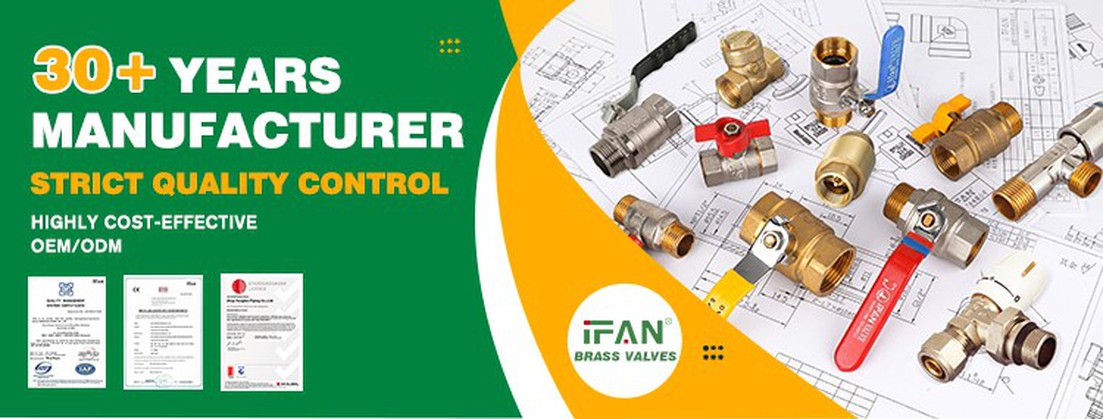
30+Years |
|
Contact Us |
Click HERE to contact us now!we are online 24 hours a day to answer your questions! |
Welcome to contact IFAN, we are online 24 hours a day to answer your questions!
Body Construction Overview
The body of a brass check valve contains thick brass walls. These walls resist high pressure and corrosion from various fluids. The valve body usually forms through forging or casting. Forging increases density and enhances metal strength. The brass alloy mixture includes copper, zinc, and small trace metals for durability.
Internal Flow Channel
The internal flow channel directs liquid through a straight or angular path. Engineers polish the channel to minimize turbulence. Smooth internal surfaces allow fluids to move quickly with low friction. The channel's geometry ensures a tight seal when pressure reverses.
Disc and Spring Assembly
The valve disc opens under forward pressure and closes when flow reverses. The spring behind the disc applies consistent pressure. This design prevents backflow effectively without vibration or chatter. Brass or stainless steel springs maintain elasticity under temperature fluctuations.
Threaded End Connections
Threaded ends connect the brass check valve securely to pipes. Each thread follows standard pipe sizes such as BSPT or NPT. Machinists cut threads precisely to prevent leaks at joints. Thread length and pitch maintain uniformity across valve models.
Sealing Components
Rubber or PTFE seals enhance tight closure between the disc and seat. The seat surface remains polished for full contact. These seals resist deformation from pressure and temperature changes. High-quality seals extend the valve's operational life.
Pressure Rating and Testing
Manufacturers test every brass check valve under strict conditions. Each valve handles pressure levels between 200 and 600 PSI. Testing ensures no leakage through body, thread, or seal. Valves undergo hydrostatic and air pressure tests before shipment.
Temperature Resistance
Brass handles wide temperature ranges without deformation. It resists heat up to 250°C in most fluid applications. The material structure retains strength in both hot and cold systems. Engineers prefer brass for thermal stability and low expansion.
Maintenance Access
Designers include removable caps for easy internal cleaning. Users can unscrew the cap and inspect the disc quickly. The smooth internal layout simplifies reassembly after maintenance. Regular inspection keeps the valve responsive and leak-free.
Comparison with Stainless Steel Valves
Brass valves weigh less than stainless steel versions. They resist corrosion in neutral and mild fluids. Stainless steel tolerates stronger acids but costs more. Brass remains ideal for domestic water and light industrial systems.
Conclusion
A brass check valve delivers precise control through its structured design. Each internal detail supports pressure resistance and backflow prevention. The material composition, smooth channels, and resilient seals ensure long service life. Its balance of strength and workability makes brass check valves dependable in every pipeline system.

|


