
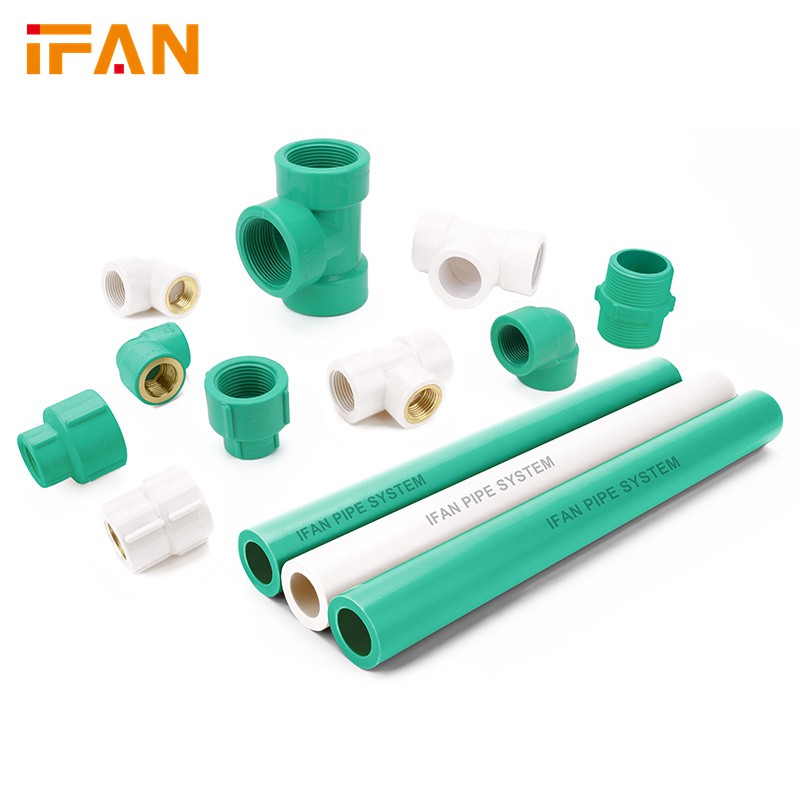
Choosing the right pipe fittings for your plumbing system is crucial for ensuring long-term performance and reliability. Two common types of pipe fittings are PPR (Polypropylene Random Copolymer) and PVC (Polyvinyl Chloride). This article compares PPR and PVC pipe fittings, highlighting their characteristics, advantages, and suitable applications to help you make an informed decision.
Material Composition and Properties
PPR Pipe Fittings
Pilsa PPR pipe fittings are made from polypropylene random copolymer. They are known for their high resistance to heat and pressure, making them suitable for both hot and cold water supply systems. PPR fittings are also known for their flexibility, which allows them to absorb shocks and vibrations better than more rigid materials.
PVC Pipe Fittings
PVC pipe fittings are made from polyvinyl chloride, a widely used plastic material. PVC is known for its chemical resistance, lightweight nature, and ease of installation. These fittings are typically used in cold water supply, drainage, and vent systems. However, they are less suited for high-temperature applications compared to PPR fittings.
Durability and Lifespan
PPR Pipe Fittings
PPR fittings are highly durable and have a long lifespan, often exceeding long-term durability according to standards when properly installed and maintained. They are resistant to scaling and corrosion, which ensures smooth water flow and minimal maintenance over time. The ability to withstand high temperatures and pressures without deforming adds to their longevity.
PVC Pipe Fittings
PVC fittings also offer good durability but are generally less robust compared to PPR fittings. They are susceptible to degradation from prolonged exposure to sunlight and high temperatures, which can reduce their lifespan. However, in normal conditions, PVC fittings can last for decades, especially in non-pressurized applications.
Installation and Ease of Use
PPR Pipe Fittings
Installing PPR fittings requires specialized welding equipment to fuse the pipes and fittings together. While this method creates a strong and leak-proof connection, it requires skilled labor and careful execution. The installation process can be time-consuming but results in a reliable and durable plumbing system.
PVC Pipe Fittings
PVC fittings are easier to install and do not require special equipment. They use solvent cement to join pipes and fittings, which simplifies the process and allows for quick installation. This makes PVC fittings a popular choice for DIY projects and applications where ease of installation is a priority.
Cost Comparison
PPR Pipe Fittings
PPR fittings are generally more expensive than PVC fittings. The higher cost is attributed to the material properties, durability, and the need for specialized installation equipment. However, the long-term benefits and reduced maintenance costs can justify the initial investment.
PVC Pipe Fittings
PVC fittings are more cost-effective and widely available. The lower material and installation costs make PVC an attractive option for budget-conscious projects. Despite being less expensive, PVC fittings still offer good performance for many applications, particularly in cold water systems and drainage.
Applications and Suitability
PPR Pipe Fittings
PPR fittings are ideal for applications that involve high temperatures and pressures, such as hot and cold water supply systems in residential and commercial buildings. Their resistance to corrosion and scaling also makes them suitable for transporting chemicals and other aggressive fluids.
PVC Pipe Fittings
PVC fittings are best suited for cold water supply, drainage, and vent systems. They are widely used in residential plumbing, irrigation, and wastewater management. PVC's chemical resistance also makes it suitable for transporting acids, bases, and other chemicals in industrial settings.
Conclusion
The choice between PPR and PVC pipe fittings depends on the specific requirements of your project. PPR fittings offer superior durability, heat resistance, and longevity, making them ideal for demanding applications. PVC fittings, on the other hand, are cost-effective, easy to install, and suitable for a wide range of standard plumbing needs. By understanding the strengths and limitations of each type, you can select the best fitting for your plumbing system, ensuring efficiency and reliability.