
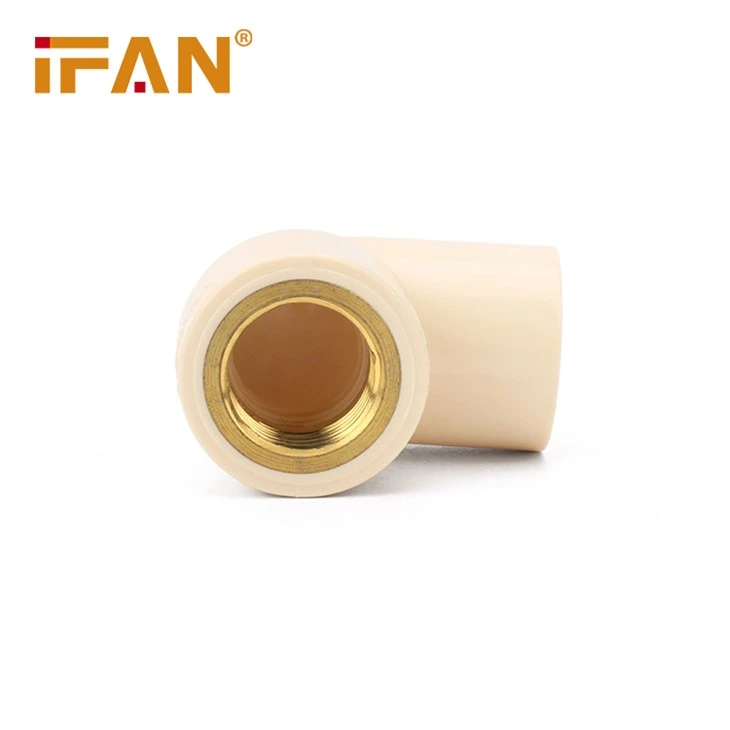


High Pressure CPVC Material Plumbing Fitting
Brand: IFAN
Connecting method:PVC Glue
Applications:Potable Water Systems
Color:Cream Color
Send Inquiry
Product Details ofHigh Pressure CPVC Material Plumbing Fitting
Introduction
CPVC stands for chlorinated polyvinyl chloride. This material offers excellent resistance to heat and corrosion. Many industries favor CPVC due to its durability and versatility.

| Product Name | CPVC Pipe Fitting |
| Color | Cream Color |
| Size | 1/2"-2" |
| Brand | IFAN or Customized |
| OEM |
Support |
| Sample | Free |
| Experience | 30+Years |
| Contact Us | Click HERE to contact us now! |
Welcome to contact IFAN, we are online 24 hours a day to answer your questions!
The Impact of Melt Temperature on the Safety of CPVC Pipe Fittings
Introduction to CPVC and Its Properties
Chlorinated Polyvinyl Chloride (CPVC) is a widely used thermoplastic in piping systems, renowned for its excellent chemical resistance, durability, and temperature tolerance. The melt temperature of CPVC, typically ranging from 200°C to 250°C (392°F to 482°F), plays a critical role in determining its processing and performance characteristics. Understanding how melt temperature affects the safety of CPVC pipe fittings is essential for manufacturers and users alike. The processing conditions during manufacturing, including melt temperature, directly influence the material's structural integrity, mechanical properties, and long-term durability, which are crucial factors in ensuring the safe operation of piping systems.
Relationship Between Melt Temperature and Mechanical Properties
The melt temperature of CPVC directly impacts its mechanical properties, including tensile strength, impact resistance, and flexibility. At optimal melt temperatures, CPVC can achieve a balanced combination of these properties, ensuring that the fittings can withstand operational stresses without compromising safety. If the melt temperature is too low, the material may not fully homogenize, leading to weak spots and reduced mechanical integrity. Conversely, excessively high melt temperatures can cause thermal degradation, adversely affecting the material's performance. These variations in mechanical properties can lead to potential failures in piping systems, which is why precise control of melt temperature during manufacturing is crucial for maintaining safety and reliability.
Implications for Thermal Stability and Long-Term Performance
Thermal stability is a significant consideration when evaluating the safety of CPVC pipe fittings. The melt temperature not only affects the initial properties of the material but also influences its performance under elevated temperatures over time. CPVC fittings are often subjected to thermal cycling in real-world applications, and their ability to maintain structural integrity under such conditions is vital. If the melt temperature during manufacturing is not properly regulated, it can lead to a loss of thermal stability, increasing the risk of deformation or failure under high-temperature conditions. Ensuring that the melt temperature is kept within the recommended range is essential for long-term performance and safety.
Effect on Chemical Resistance and Compatibility
The melt temperature of CPVC also affects its chemical resistance, an essential factor for ensuring safety in applications involving aggressive fluids. During the melting and processing phase, the molecular structure of CPVC can be altered, potentially impacting its ability to resist chemical attacks. If the material is processed at temperatures that are too high, it may become more susceptible to degradation by harsh chemicals, which can lead to leaks or system failures. Thus, controlling the melt temperature is critical for maintaining the chemical resistance of CPVC fittings, particularly in industries where exposure to corrosive substances is prevalent. Properly managed melt temperatures can help ensure the longevity and safety of the piping system.
Conclusion and Best Practices for Safe CPVC Use
In summary, the melt temperature of CPVC pipe fittings is a vital factor that influences their safety and performance in various applications. Manufacturers and users must pay careful attention to processing conditions to optimize the melt temperature, balancing the need for mechanical integrity, thermal stability, and chemical resistance. Implementing best practices, such as rigorous quality control during manufacturing and adherence to industry standards, can enhance the safety and reliability of CPVC piping systems. As technology advances, ongoing research into the effects of melt temperature and new formulations can lead to improved materials that better withstand the challenges posed by demanding environments. By understanding and managing the impact of melt temperature, stakeholders can ensure the safe and effective use of CPVC in diverse applications.


Hot Tags: high pressure cpvc material plumbing fitting, China high pressure cpvc material plumbing fitting manufacturers, suppliers, factory, CPVC Ball Valve, CPVC Flange, CPVC Tee Fitting, CPVC Union Fitting, CPVC Male Socket, CPVC Female Socket
Send Inquiry
