


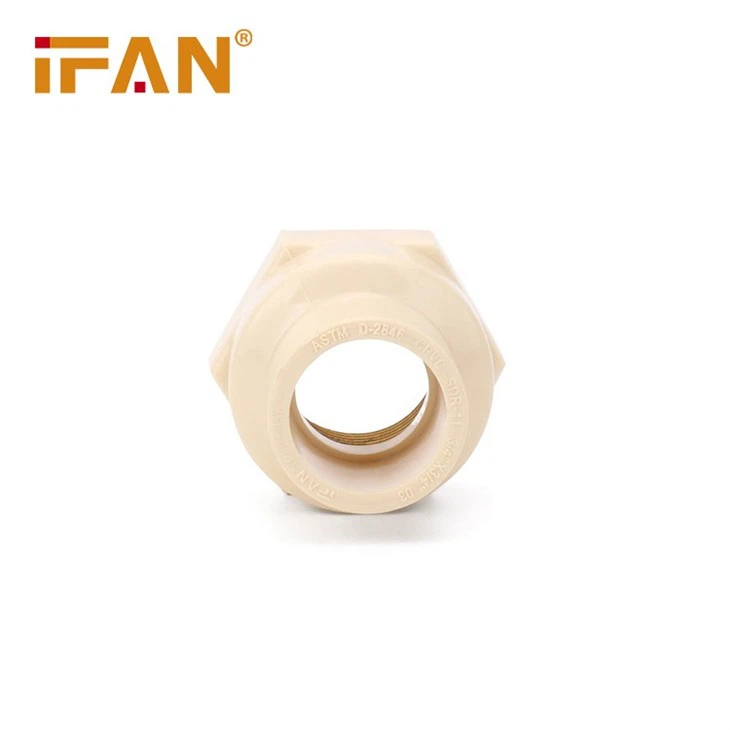

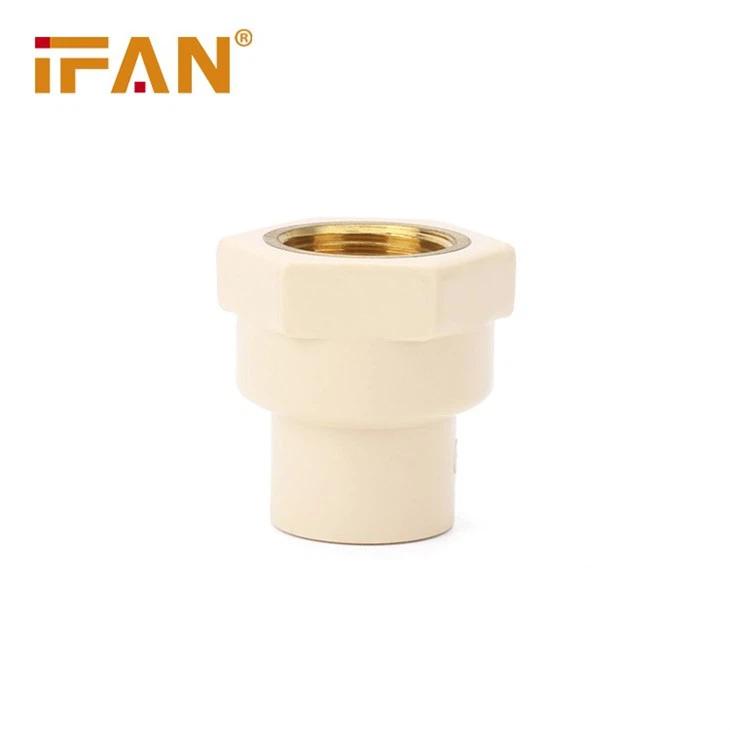
Good Quality CPVC PLastic Pipe Connector Plumbing Fitting
Brand: IFAN
Connecting method:PVC Glue
Applications:Potable Water Systems
Color:Cream Color
Send Inquiry
Product Details ofGood Quality CPVC PLastic Pipe Connector Plumbing Fitting
Introduction
CPVC stands for chlorinated polyvinyl chloride. This material offers excellent resistance to heat and corrosion. Many industries favor CPVC due to its durability and versatility.

| Product Name | CPVC Pipe Fitting |
| Color | Cream Color |
| Size | 1/2"-2" |
| Brand | IFAN or Customized |
| OEM |
Support |
| Sample | Free |
| Experience | 30+Years |
| Contact Us | Click HERE to contact us now! |
Welcome to contact IFAN, we are online 24 hours a day to answer your questions!
The Impact of Thermal Expansion of CPVC Pipe Fittings on Fluid Flow Rates
Understanding CPVC and Its Thermal Expansion Characteristics
Chlorinated Polyvinyl Chloride (CPVC) is a popular material used in piping systems due to its excellent chemical resistance and ability to withstand high temperatures. However, one important characteristic of CPVC is its thermal expansion, which can affect various aspects of fluid flow within the piping system. The coefficient of linear thermal expansion for CPVC typically ranges from 0.05 to 0.1 mm/m·°C. This means that as temperatures fluctuate, the dimensions of CPVC fittings change, which can lead to significant implications for fluid dynamics. Understanding how this thermal behavior interacts with fluid flow rates is critical for engineers and designers aiming to optimize system performance and ensure efficiency.
The Relationship Between Pipe Diameter and Flow Rate
Thermal expansion affects the internal diameter of CPVC pipes, which in turn influences the velocity of fluids flowing through them. As temperatures increase, CPVC expands, leading to a slight increase in the internal diameter of the pipe. According to the principle of fluid dynamics, an increase in pipe diameter typically results in a decrease in fluid velocity, assuming constant flow rates. This is due to the conservation of mass; as the cross-sectional area of the pipe increases, the same volume of fluid must occupy a larger space, resulting in a slower flow rate. Conversely, when temperatures drop and CPVC contracts, the internal diameter decreases, potentially increasing fluid velocity. Engineers must account for these variations when designing piping systems, especially in applications where precise flow rates are critical.
Effects of Flow Rate on System Efficiency
Changes in fluid flow rates due to thermal expansion can significantly impact the efficiency of a piping system. Slower fluid velocities may lead to increased residence time within the pipes, which can result in several issues such as sedimentation, corrosion, or the accumulation of debris. In systems where temperature control is vital, slower flow rates can also compromise heat transfer efficiency, affecting overall performance. On the other hand, increased velocities in contracted pipes can lead to erosion or wear at joints and fittings due to higher shear forces. Understanding these dynamics allows engineers to optimize their designs, ensuring that the impact of thermal expansion on flow rates is managed effectively to maintain system efficiency.
Mitigation Strategies for Managing Flow Rate Changes
To mitigate the effects of thermal expansion on fluid flow rates, several strategies can be implemented in CPVC piping systems. One effective approach is to incorporate expansion joints or flexible fittings that can accommodate changes in pipe dimensions without significantly affecting flow rates. Additionally, using variable speed pumps can help maintain consistent flow rates despite temperature fluctuations. Engineers can also design systems with adjustable flow control valves that allow for real-time adjustments based on temperature conditions. By employing these strategies, operators can ensure that fluid flow remains stable and efficient, even as thermal expansion impacts the physical properties of the CPVC pipes.
Monitoring and Future Considerations
Ongoing monitoring of fluid flow rates and temperature conditions is essential for maintaining the efficiency of CPVC piping systems. Regular inspections can help identify any changes in flow characteristics that may arise from thermal expansion and contraction. Advanced monitoring technologies, such as flow meters and temperature sensors, can provide real-time data, allowing for prompt adjustments to maintain optimal flow conditions. Additionally, as materials and technologies continue to evolve, engineers should consider innovations in CPVC formulations that may offer improved thermal stability and reduced expansion rates. By staying informed and proactive, operators can enhance the reliability and efficiency of CPVC piping systems in the face of thermal expansion challenges.


Hot Tags: good quality cpvc plastic pipe connector plumbing fitting, China good quality cpvc plastic pipe connector plumbing fitting manufacturers, suppliers, factory, CPVC Reducer Socket, CPVC 45 Elbow, CPVC Union Fitting, CPVC Flange, CPVC End Cap, CPVC Male Socket
Send Inquiry
