


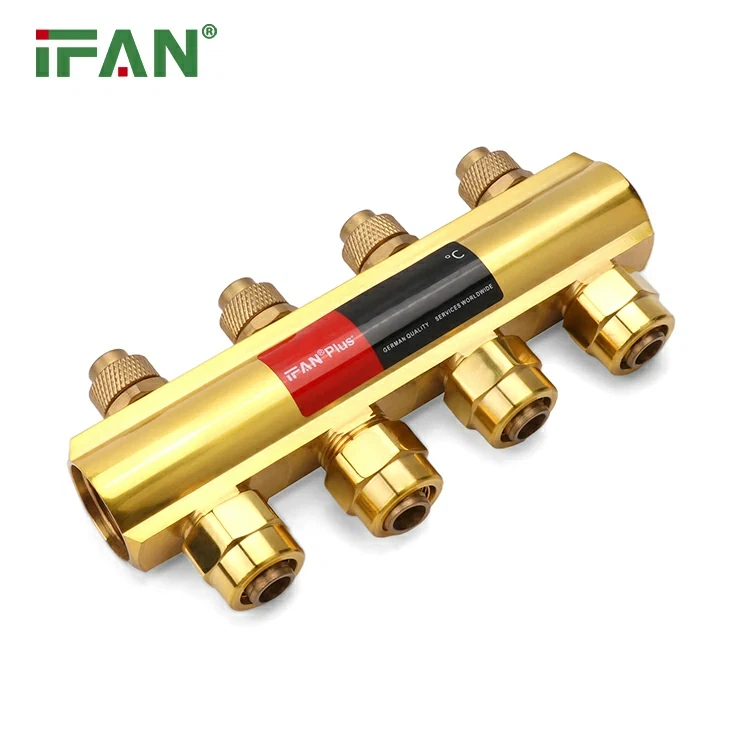


Strong Pressure Resistance Brass Manifold
Brand: IFAN/OEM
Applications:Water Systems/Hydronic Heating Systems/HVAC Systems
Color:Silver,Brass,Bule,Red Or Customized
Send Inquiry
Product Details ofStrong Pressure Resistance Brass Manifold
Introduction Brass manifolds control fluid flow in heating and plumbing systems. They distribute liquids efficiently. Engineers design them for durability and corrosion resistance. Their solid structure ensures long-term performance. Industries use them for various applications.

| Product Name | IFAN Brass Manifold |
| Size | 3/4''-1'' |
| Color | Silver,Bule,Brass,Red Or Customized |
| Connection | Thread |
| Features | Durable, easy to install, corrosion resistant |
| Sample | Sample Free |
| Contact | Click HERE to contact us now! |
Welcome to contact IFAN, we are online 24 hours a day to answer your questions!

Understanding Thermal Expansion in Materials
Thermal expansion refers to the tendency of a material to change its shape or volume when heated. When a material is exposed to heat, its molecules move faster, causing the material to expand. Brass, being a metal alloy primarily made of copper and zinc, has a specific thermal expansion coefficient. This coefficient determines how much brass expands with an increase in temperature. Brass manifolds are designed to handle the stresses caused by these thermal changes. The expansion rate is controlled to ensure the manifold does not warp, crack, or leak under fluctuating temperatures. The alloy composition of brass helps it manage thermal changes better than some other metals. Brass maintains a stable structure even when subjected to the heat cycles common in plumbing or industrial systems. However, understanding how thermal expansion works in materials like brass is essential for designing a reliable manifold that resists such stresses.
Brass's Thermal Expansion Properties
Brass has a relatively low coefficient of thermal expansion compared to many other metals. This means that it does not expand or contract as much when exposed to temperature changes. As brass heats up, its molecules slightly move apart, causing the material to expand. However, the alloy's molecular structure is relatively stable, which helps limit expansion. Brass expands and contracts predictably, unlike some other materials that might experience significant warping or distortion. The exact rate of expansion depends on the specific alloy used. Brass typically expands at a rate of about 19 × 10⁻⁶/°C, which is moderate compared to other materials like aluminum or steel. This expansion rate is suitable for use in systems where temperature fluctuations are expected. Brass manifolds are engineered with these properties in mind to ensure long-term performance without failure due to thermal stress.
Design Features to Counteract Thermal Stress
Brass manifolds are designed with specific features to resist the stresses of thermal expansion. One important design consideration is the uniformity of the material. A uniform material structure ensures that thermal expansion happens evenly across the manifold. This reduces the risk of warping or stress fractures. Additionally, brass manifolds are designed with smooth, consistent surfaces that avoid sharp corners or areas of stress concentration. These features allow the manifold to expand and contract without creating points of weakness. The fittings and ports are also strategically placed to distribute stress evenly across the manifold. This helps to ensure that pressure is not concentrated in one area during thermal changes. Moreover, advanced manufacturing techniques are used to control the thickness and shape of the manifold to minimize the impact of thermal expansion. These design features ensure that the manifold remains stable and reliable in systems that experience temperature fluctuations.
Manufacturing and Material Consistency
To ensure that brass manifolds resist thermal expansion stress, manufacturers pay close attention to material consistency. The brass alloy must be of high quality, with a balanced mix of copper and zinc. Variations in the alloy composition could lead to unpredictable expansion rates, compromising the performance of the manifold. Manufacturers use precise mixing and melting processes to ensure that the brass alloy maintains its properties throughout the production process. Once the alloy is formed into a manifold shape, it undergoes further testing to verify its thermal expansion characteristics. The brass used in these manifolds must also be free from impurities, as contaminants can weaken the material. By maintaining strict control over material quality, manufacturers can create brass manifolds that consistently resist thermal expansion stress. This ensures that each manifold performs reliably, even under temperature fluctuations.
Thermal Cycling and Its Effect on Brass Manifolds
Thermal cycling refers to the repeated heating and cooling of a material over time. Brass manifolds are subjected to thermal cycling in various applications. Repeated expansion and contraction can cause fatigue in some materials, leading to cracks or failure. However, brass is well-suited to withstand thermal cycling. Due to its relatively low coefficient of thermal expansion and stable molecular structure, brass can endure these repeated temperature changes without significant degradation. When designed properly, brass manifolds do not show signs of wear, cracks, or distortion after extensive thermal cycling. In fact, they retain their shape and function even after many years of exposure to temperature changes. Testing and quality control procedures are crucial to ensure that the manifold can handle thermal cycling without failure. Manufacturers simulate thermal cycling conditions to confirm the reliability and durability of the brass manifolds over time.
Impact of Temperature Fluctuations on Brass
Brass manifolds are exposed to temperature fluctuations, especially in environments where heating and cooling systems operate. In these conditions, brass must be able to resist the stresses caused by expansion and contraction. The brass alloy used in the manufacturing process ensures that it does not undergo extreme changes in its structural integrity when subjected to high or low temperatures. While extreme temperatures could cause other materials to fail, brass is resilient and maintains its form. The brass manifold's ability to resist thermal expansion stress is vital to maintaining system integrity in both hot and cold environments. Whether exposed to heat from water or environmental temperature changes, the manifold remains stable. In fact, brass's ability to handle these fluctuations makes it a preferred material for systems that require consistent performance across a range of temperatures.
Innovations in Brass Manifold Design for Thermal Stress Resistance
Over time, innovations have been made in the design of brass manifolds to further improve their resistance to thermal expansion stress. One such innovation is the incorporation of ribbed designs or expansion joints into the manifold. These features help to accommodate thermal expansion by allowing the brass to expand without causing stress on the manifold body. Ribbed structures provide more flexibility for the material to expand while maintaining its integrity. Expansion joints allow the brass to move slightly without compromising the system's overall structure. These innovations reduce the likelihood of cracks or leaks developing over time. Manufacturers are continually researching ways to improve brass manifold designs, ensuring that they can handle even greater temperature fluctuations while maintaining their strength and performance. Advanced computer modeling and simulations also help engineers predict how the brass manifold will respond to temperature changes, leading to further refinements in design.
Stress Testing and Performance Verification
Before brass manifolds are released for use, they undergo rigorous stress testing to verify their ability to withstand thermal expansion. These tests simulate extreme temperature changes and measure how the manifold reacts to these fluctuations. The testing process involves subjecting the manifold to both rapid and gradual temperature changes. The manifold is monitored for any signs of deformation, cracking, or leakage. By measuring the performance of the manifold under these conditions, manufacturers can ensure that it will not fail when exposed to real-world temperature variations. Thermal stress tests are conducted in accordance with industry standards to guarantee the reliability of the brass manifold. These tests help ensure that the final product is capable of performing reliably over a long period, even under continuous exposure to thermal expansion stress.
Maintaining Thermal Stability in Brass Manifolds
To ensure that brass manifolds maintain their thermal stability, regular monitoring and maintenance are crucial. Over time, external factors such as changes in temperature or pressure can affect the manifold's performance. Therefore, it is important to periodically inspect the manifold for signs of wear or stress. In particular, regular checks should focus on the manifold's connections, threads, and sealing surfaces. By monitoring these areas, potential issues related to thermal expansion stress can be detected early. Routine maintenance can help prevent leaks or failures caused by the material's response to temperature changes. In addition, it is important to ensure that the system is not exposed to excessive temperature fluctuations that might exceed the manifold's thermal stress limits. Proper care and monitoring contribute to the continued performance and longevity of the brass manifold in thermal environments.




Hot Tags: strong pressure resistance brass manifold, China strong pressure resistance brass manifold manufacturers, suppliers, factory, PPR Pipe Clip, CPVC Tee Fitting, CPVC Reducer Socket, PPR Single Union Ball Valve, Brass Compression Elbow Fitting, PPR Female Ball Valve
Send Inquiry
