


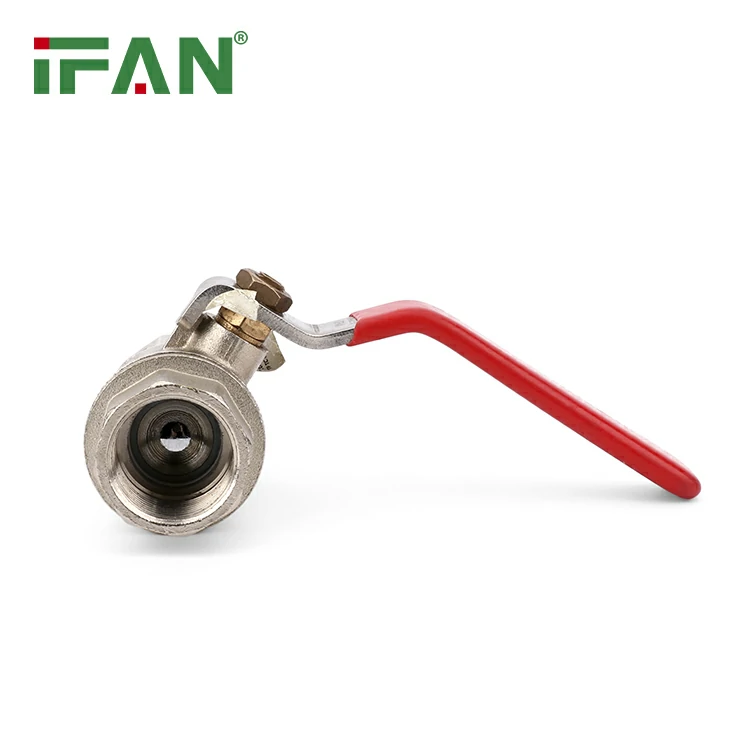
Ball Valve Brass Used In Chemical Processing
Brand:IFAN
Connecting method:Thread
Applications:Water Systems
Color:Silver or Brass
Send Inquiry
Product Details ofBall Valve Brass Used In Chemical Processing

| Product Name | Brass Ball Valve |
| Color | Brass or Sliver Color |
| Size | 1/4''-4'' |
| Brand | IFAN or Customized |
| OEM |
Support |
| Sample | Free |
| Experience | 30+Years |
| Contact Us | Click HERE to contact us now! |
Welcome to contact IFAN, we are online 24 hours a day to answer your questions!
Stability Within Complex Chemical Streams
Ball Valve Brass operates in processing lines with highly varied chemical streams. These streams often shift in concentration. Such shifts may alter internal flow behavior. Engineers study how complex mixtures move through controlled channels. They examine changes in viscosity across different temperatures. Testing reveals how structural features respond to unstable flow. Adjustments help maintain predictable movement inside the system. Internal geometry must stay consistent during rapid transitions. Repeated evaluation confirms steady flow patterns. Ball Valve Brass demonstrates reliable performance under shifting chemical conditions.
Reaction to Aggressive Chemical Vapors
Chemical plants often contain aggressive vapors. These vapors drift between processing zones. Their presence may affect exposed surfaces. Engineers simulate vapor exposure inside sealed chambers. They observe small structural changes over extended periods. Testing helps determine areas requiring enhanced protection. Surface density and uniformity are key factors. Controlled finishes reduce unwanted reactions. Vapor trials include different concentrations and durations. Reliable behavior requires predictable surface performance. Ball Valve Brass maintains stable form under continuous vapor influence.
Function Under Variable Processing Pressures
Chemical processing uses fluctuating pressures. Some stages involve rapid compression cycles. Others rely on controlled low-pressure movement. Pressure shifts affect internal components differently. Engineers reproduce these cycles using high-capacity chambers. They evaluate deformation risks during fast transitions. Balanced geometry reduces stress buildup under pressure variance. Technicians adjust spacing to preserve alignment. Structural consistency supports controlled flow management. Repeated stress testing ensures dependable performance. Ball Valve Brass remains stable when exposed to demanding processing pressures.
Behavior During Thermal Gradient Exposure
Chemical reactions often generate strong thermal gradients. Temperature differences can appear suddenly within system zones. These gradients may create unpredictable material responses. Engineers model gradients using multi-phase thermal simulations. They track changes in internal spacing during each phase. Designers refine geometry to compensate for thermal stress. Controlled surface treatment improves stability under rapid heating. Cooling cycles receive equal attention during testing. Trials confirm stable behavior across dramatic temperature swings. Ball Valve Brass supports predictable function under sharp thermal gradients.
Interaction With Multi-Phase Chemical Mixtures
Chemical processes frequently involve multi-phase mixtures. These mixtures may include liquids, gases, and suspended solids. Each phase behaves differently under movement. Engineers evaluate how these phases interact inside controlled pathways. They adjust internal channels to reduce cross-phase turbulence. Smooth transitions help maintain predictable movement across phases. Testing includes high-density mixtures and volatile blends. Recorded patterns support improvements in internal flow control. Balanced geometry limits unwanted separation of phases. Ball Valve Brass accommodates complex mixtures through refined structural accuracy.
Response to Corrosive Processing Residues
Chemical reactions often leave strong residues. These residues may cling to internal surfaces. Sticky deposits can alter flow stability. Engineers examine residue formation under repeated cycles. They simulate slow and rapid buildup using controlled environments. Surface preparation reduces adhesion points. Smooth finishes resist residue attachment more effectively. Long-term trials reveal how deposits influence internal clarity. Designers refine surfaces to limit interference from residue formation. Stable performance requires predictable surface behavior. Ball Valve Brass remains dependable despite aggressive chemical residues.
Stability Under High-Frequency Processing Cycles
Some chemical systems operate continuously with fast cycles. High-frequency cycles create internal stress patterns. These patterns may shift material alignment gradually. Engineers monitor structural behavior during rapid repetition. They use sensors to record minute changes at key points. Results guide refinements in spacing and geometry. High-speed simulations replicate real plant conditions. Predictable performance requires resistance to high-speed fatigue. Structural reinforcement supports long-term operation. Ball Valve Brass demonstrates durability during intense processing cycles.
Endurance Against Mechanical Stress in Processing Plants
Chemical facilities generate constant mechanical forces. Pumps, mixers, and conveyors create vibrations. These vibrations may disturb internal components. Engineers measure vibration effects across different frequencies. They simulate plant environments using advanced platforms. Structural improvements reduce unwanted oscillation. Balanced internal movement supports stable flow regulation. Testing involves extended vibration periods to reveal long-term trends. Results confirm resistance to mechanical interference. Ball Valve Brass sustains predictable performance despite heavy industrial vibration.
Performance Across Combined Chemical Processing Conditions
Chemical processing rarely presents isolated variables. Multiple conditions often act together. Temperature, pressure, composition, and reaction speed interact constantly. Engineers test combined factors using integrated simulations. These simulations recreate real processing zones with overlapping stresses. Data reveals subtle weaknesses hidden during single-condition testing. Structural refinements address these multi-factor challenges. Stability requires careful coordination between geometry and spacing. Long-cycle trials ensure reliable performance under true plant conditions. Ball Valve Brass performs consistently within complex chemical environments.


Hot Tags: ball valve brass used in chemical processing, China ball valve brass used in chemical processing manufacturers, suppliers, factory
Send Inquiry
